
Gill Flukes in Koi: Identification, Symptoms and Treatment
Educational guide · References and further reading below. Seek qualified advice for fish-health decisions.
Gill flukes are among the most important microscopic worm parasites encountered in koi. In everyday koi language, “gill flukes” usually refers to egg-laying monogenean flatworms of the dactylogyrid type, especially Dactylogyrus and related forms that attach to gill tissue. Koi and common carp can carry several Dactylogyrus species, and a heavy burden can cause severe respiratory disease even when the skin looks almost normal.
Gill flukes matter because the gills are not just another body surface. They are the organ through which koi obtain oxygen, remove carbon dioxide, excrete much of their ammonia and help regulate salts and acid-base balance. A parasite that repeatedly hooks into delicate gill filaments can therefore create a much larger physiological problem than its microscopic size suggests.
The second reason these parasites deserve careful diagnosis is their life cycle. Unlike the live-bearing skin fluke Gyrodactylus, dactylogyrid gill flukes lay eggs. Many treatments are much more effective against exposed worms than against eggs already present in the system. A pond can therefore appear improved after treatment and then relapse as eggs hatch. Successful control depends on identifying the parasite, protecting respiratory function, selecting an appropriate treatment protocol, and confirming that the next generation has also been eliminated.
Flashing, rapid breathing, hanging near a waterfall and clamped fins are not proof of gill flukes. The same signs can occur with low dissolved oxygen, ammonia, nitrite, chlorine, Trichodina, Costia, Chilodonella, bacterial gill disease, koi herpesvirus, carp edema virus and other conditions. This article therefore treats microscopy and water-quality testing as central parts of treatment rather than optional extras.
1. The Short Answer
Gill flukes are microscopic monogenean flatworms that live primarily on the gills of koi. The common dactylogyrid type is an egg layer with an attachment organ called a haptor, armed with large anchors and smaller hooks. Heavy infestations irritate and injure gill tissue, stimulate excess mucus, impair gas exchange and can predispose the fish to secondary infection.
A practical diagnosis is made from a fresh gill wet mount examined under a light microscope. Dactylogyrid flukes are usually several hundred micrometres long and may show two to four eye spots near the head and a conspicuous posterior haptor. UF/IFAS lists a representative dactylogyrid at about 328–388 µm long, although size and morphology vary among species.
Praziquantel is widely regarded in veterinary references as the treatment of choice for monogeneans in ornamental fish, but product formulation, local law, pond conditions and exact dosing matter. Because gill-fluke eggs can survive a treatment that removes adults, repeat treatment or a prolonged protocol may be required. Post-treatment microscopy is the safest way to decide whether control has actually been achieved.
2. What Are Gill Flukes?
Gill flukes are parasitic flatworms in the class Monogenea. The name “monogenean” refers to a group of parasites that usually complete their life cycle on a single host species or host group without an intermediate host such as a snail. Most fish monogeneans live on the skin, fins or gills.
In koi, the term gill fluke is commonly used for dactylogyrid worms, including Dactylogyrus species. Scientific surveys of common carp have identified multiple species, including D. extensus, D. vastator and D. minutus. Species-level identification requires examination of the hardened attachment and reproductive structures and sometimes molecular methods; routine koi treatment usually begins with recognition of a clinically important monogenean burden rather than exact species determination.
3. Gill Flukes Are Not the Same as Skin Flukes
Koi keepers often group Dactylogyrus and Gyrodactylus together as “flukes,” but their biology differs in ways that change treatment strategy. Dactylogyrids are classically gill-associated and egg-laying. Gyrodactylids are more often found on skin and fins and most are live bearers that can contain a developing embryo inside the adult.
That reproductive difference is crucial. When an egg-laying gill fluke is treated, eggs in the pond may remain viable and later hatch. With a live-bearing skin fluke, there is no equivalent environmental egg stage. This is why the interval, duration and number of treatments cannot simply be copied from one type of fluke to the other.
4. Why Koi Are Susceptible
Koi are Cyprinus carpio, and cyprinids are well-recognised hosts for dactylogyrid monogeneans. A natural host-parasite relationship does not mean the parasite is harmless. In a lightly stocked natural environment, transmission opportunities may be limited. In a pond, dealer facility, show holding system or quarantine tank, high host density allows infective larvae to find another fish efficiently.
Transport, temperature shifts, poor water quality, crowding and other disease can also reduce the fish’s ability to tolerate a parasite burden. This is why a fluke count that causes little obvious disease in one pond may be clinically important in another.
5. Where Gill Flukes Live
The most important site is the gill. Adult worms attach to the gill filaments and lamellae using the haptor at the posterior end of the body. Some monogeneans have broader site preferences, but a koi with significant respiratory signs may carry a much heavier burden on the gills than a routine skin scrape suggests.
This has an important diagnostic consequence: a negative skin scrape does not rule out gill flukes. If the fish is breathing rapidly, coughing, piping or showing abnormal gill appearance, the diagnostic plan must include the gills when it can be sampled safely.
6. How the Haptor Attaches
The haptor is the hold-fast organ at the rear of the worm. Dactylogyrid haptors contain large anchor hooks, transverse supporting bars and a ring of smaller marginal hooks. These hardened structures are among the most useful features for identifying monogeneans under a microscope.
Attachment is not passive. The hooks grip living gill tissue while the worm moves and feeds. Repeated penetration, mechanical irritation and feeding damage can disrupt the thin epithelial surface that the koi depends on for efficient gas exchange.
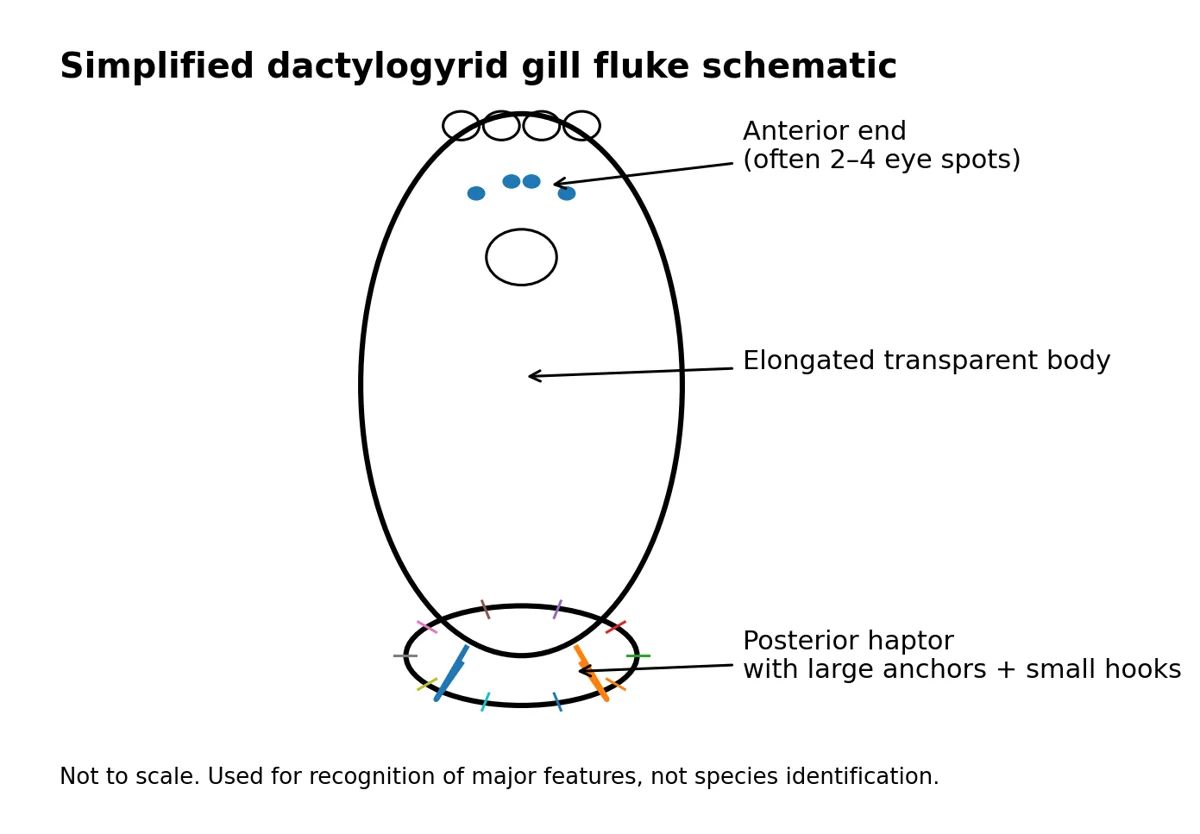
Figure 1. Simplified morphology of a dactylogyrid gill fluke. The diagram is not intended for species-level identification.
7. What Gill Flukes Feed On
Monogeneans on fish surfaces feed on mucus, epithelial material and tissue debris; some species also damage capillaries or consume blood. The clinical effect depends on species, number of worms, exact attachment site, fish size and the condition of the gills before infestation.
The combination of hooks, feeding activity and inflammation can turn a microscopic infestation into a major respiratory problem when burdens become high.
8. The Life Cycle Is Direct
Gill flukes do not require an intermediate host. The adult lays eggs that leave the fish and enter the pond or treatment system. After development, a ciliated free-swimming larva called an oncomiracidium hatches, searches for a suitable fish, attaches to the gills and develops into a juvenile and then an adult.
A direct life cycle makes transmission efficient in crowded systems. It also means that moving infected koi, water or wet equipment between ponds can move the problem without any other animal being involved.
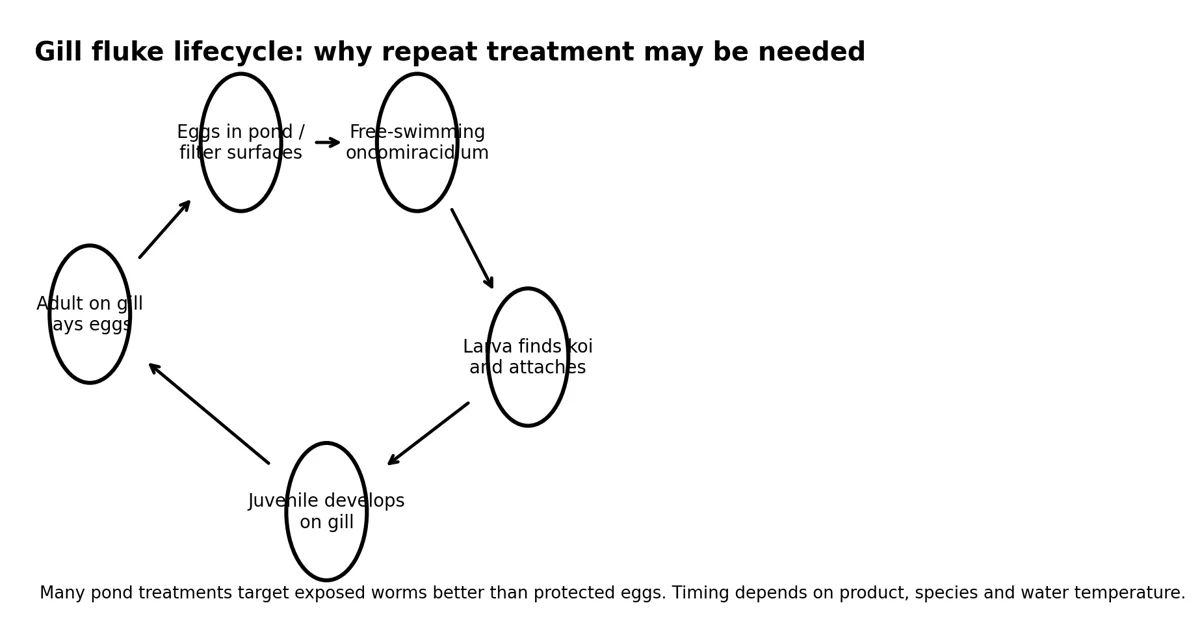
Figure 2. Simplified egg-laying gill-fluke life cycle and the reason treatment may need to cover more than one generation.
9. Why the Egg Stage Changes Treatment
Many commonly used external parasite treatments have limited activity against monogenean eggs. Removing adult worms can therefore produce a convincing early improvement while viable eggs remain in the system. When those eggs hatch, the new larvae can reinfect koi and symptoms return.
This is not automatically drug resistance or a failed product. It may simply mean that the treatment did not cover the full biological window. A protocol for an egg-laying gill fluke must consider how long eggs take to hatch under the actual water temperature and how long the chosen medication remains therapeutically active.
10. Temperature Affects Development
Dactylogyrid development is temperature-dependent. Warmer water generally shortens embryonic development and generation time within the biologically suitable range, while cold water can slow or suspend hatching. A 2022 study of Dactylogyrus vastator found that egg hatching and development changed markedly with temperature; published experimental work cited a life cycle of roughly 8–10 days under favourable laboratory conditions, but this should not be treated as a universal pond interval.
The practical lesson is not to memorise one number. Treatment spacing that makes sense in warm water may be too short or too long in cool water, and different products have different persistence. Follow the exact product or veterinary protocol and verify the result microscopically.
11. How Gill Flukes Spread Between Koi
The free-swimming larval stage can move through the water to a new host, while infected koi introduce adult parasites and eggs into a system. Nets, bowls, socks, measuring tubs and other wet equipment can also transfer eggs or contaminated water between ponds.
This is why quarantine and equipment separation matter. A healthy-looking newly purchased koi may carry a low burden without dramatic symptoms, yet still seed a previously clean pond.
12. Low Numbers Versus a Heavy Infestation
The clinical importance of a monogenean finding is judged in context. One fluke on a well-oxygenated koi with normal gills and no symptoms is not interpreted in the same way as repeated flukes across several gill fields in fish that are piping and producing heavy mucus.
Record the approximate burden, the sample site, the condition of the gills, the fish’s respiratory rate and water-quality data. “Flukes present” is less useful than “numerous dactylogyrid flukes on gill wet mount in three koi with rapid respiration.”
13. The Earliest Signs Are Usually Nonspecific
Early infestation may produce intermittent flashing, occasional head shaking, subtle increases in respiratory rate, mild clamping of the fins, reduced activity or a small drop in appetite. These are warning signs rather than a diagnosis.
A koi can also remain bright and continue feeding while a moderate gill burden is developing. Appetite alone should never be used to rule out a respiratory parasite.
14. Flashing and Rubbing
Gill irritation can cause koi to flash against the pond floor, walls or pipework. Some fish make a sudden sideways flick, while others repeatedly rub the head or opercular region.
Flashing is extremely nonspecific. Ammonia, nitrite, chlorine, pH instability, Costia, Chilodonella, Trichodina, skin flukes and even physical irritation can produce similar behaviour. Water testing and microscopy should come before treatment.
15. Rapid Breathing
One of the most important signs of gill flukes is increased opercular movement. A heavily infested koi may breathe rapidly even while stationary because effective respiratory surface area has been reduced and the gill tissue is inflamed.
Rapid breathing should always trigger an immediate dissolved-oxygen assessment when possible. Gill damage and low oxygen can act together, and a fish that might tolerate one problem can decompensate when both occur at once.
16. Coughing, Yawning and Head Shaking
Koi with irritated gills may show exaggerated mouth and opercular movements often described as coughing or yawning. They may suddenly flare the gill covers, shake the head or make forceful movements as if trying to clear material from the gills.
These behaviours can be useful clues but are not specific to flukes. Mucus, particulate irritation and other gill pathogens can produce the same response.
17. Piping and Hanging Near Returns
Severely affected koi may spend time near a waterfall, air diffuser or high-flow return, or may rise to the surface and repeatedly gulp. This is sometimes called piping.
Treat this as a respiratory emergency. Increase aeration immediately while checking dissolved oxygen, ammonia, nitrite, recent chemical use and gill condition. Do not delay oxygen support while waiting for microscopy.
18. Clamped Fins and Reduced Activity
As respiratory stress increases, koi may hold the fins against the body, stop cruising normally, isolate from the group or rest in low-current areas. Some fish alternate between resting and short bursts toward oxygen-rich water.
Reduced activity is a whole-fish sign of distress and should increase the urgency of the investigation.
19. Loss of Appetite and Condition
Chronic gill irritation can reduce appetite and growth. A fish that cannot breathe comfortably may spend less time feeding and more time maintaining position near oxygen-rich water.
Weight loss or poor condition also raises the possibility of mixed disease. A gill-fluke diagnosis does not exclude bacterial, viral or environmental problems.
20. What the Gills May Look Like
Normal koi gills are generally a healthy red and have a fine, regular filament structure. Gill flukes can be associated with excess mucus, swelling, patchy pallor, darker inflamed areas, frayed tissue, focal haemorrhage or uneven movement of the opercula.
Appearance alone is unreliable. Severe gill necrosis can occur with viral disease or chemical injury, while fluke-infested gills may look only mildly abnormal early in the course. Microscopy and the wider case history remain essential.
21. How Gill Flukes Damage Respiratory Tissue
The haptoral hooks penetrate and grip delicate gill tissue. Mechanical trauma and inflammation stimulate epithelial hyperplasia and mucus production. With heavier burdens, lamellae can become thickened, fused or congested, reducing the surface area available for oxygen transfer.
The koi may compensate by breathing faster, but compensation has limits. Warm water, high stocking density or low dissolved oxygen reduces the safety margin further.
22. Secondary Bacterial Disease Can Follow
Damaged gills are more vulnerable to opportunistic bacteria. Once the epithelial barrier is disrupted, a fish may have both the original parasite problem and a secondary bacterial component.
This is why a koi that remains distressed after fluke numbers fall should be reassessed rather than automatically given more antiparasitic medication. Persistent gill damage, bacterial involvement or a different primary disease may now be the dominant problem.
23. Small Koi Can Deteriorate Quickly
Juvenile koi have less total gill area and physiological reserve than large adults. A parasite burden that represents a modest absolute number of worms can occupy a large proportion of the functional gill surface of a small fish.
Rapid losses in fry or small koi therefore deserve urgent evaluation, especially in crowded rearing systems.
24. Why Symptoms Alone Cannot Confirm Gill Flukes
The classic signs—flashing, rapid breathing, excess mucus and hanging near returns—are shared by many conditions. Treating on appearance alone can expose already damaged gills to unnecessary chemicals and delay the correct diagnosis.
The safest sequence is: stabilise oxygen, test water, examine the fish, collect an appropriate fresh sample and then choose treatment based on evidence.
25. Check Water Quality First
Before handling a respiratory case, measure temperature, pH, ammonia and nitrite. Dissolved oxygen is especially important when fish are breathing rapidly or gathering near returns. Chlorine or chloramine should be considered after major water changes, and alkalinity is relevant when certain chemicals such as copper are being considered.
Correcting an environmental emergency can save fish faster than any parasite treatment. It also makes subsequent treatment safer.
26. Choose Representative Fish
When several koi are affected, examine more than one fish if practical. Select a fish showing typical signs rather than automatically choosing the easiest fish to catch. A single negative sample from a lightly affected koi can create false reassurance.
For large collections, sampling several symptomatic fish gives a much better picture of the burden and whether more than one parasite is present.
27. Why a Skin Scrape May Miss the Problem
A routine skin scrape is excellent for many external parasites, but gill flukes can be concentrated on the gills. A fish may therefore have a nearly clean skin scrape and still carry a clinically important gill burden.
If respiratory signs dominate the case, the gills must be considered. This is one of the most common reasons a “parasite check” can be falsely reported as negative.
28. Gill Sampling Must Be Gentle
Gill tissue is delicate and bleeds easily. A diagnostic sample should be collected by someone trained to restrain koi and obtain a very small amount of mucus or superficial filament material without causing unnecessary trauma. Cutting a substantial piece of living gill for routine hobby diagnosis is not appropriate.
If the fish is severely hypoxic, unstable or extremely valuable, professional aquatic veterinary support is preferable to repeated handling. Sometimes the safest immediate action is to improve oxygenation and obtain expert help rather than pursue an aggressive sample.
29. Preparing a Fresh Gill Wet Mount
Place the small fresh sample in a drop of pond water or appropriate isotonic medium on a clean slide and add a coverslip gently. The goal is a thin preparation in which parasites can move naturally and the hooks remain visible.
Examine the sample immediately. Drying, crushing or allowing the sample to sit too long can distort movement and morphology.
30. Microscope Magnification
Start at low power so the whole preparation can be scanned systematically. Monogeneans are much larger than Costia or many ciliates and can often be detected at low magnification. Move to higher power to examine eye spots, the haptor and the arrangement of anchors and hooks.
For routine koi work, identifying a dactylogyrid-type fluke and estimating burden is usually more useful than attempting species-level taxonomy.
31. What a Gill Fluke Looks Like Under the Microscope
A fresh dactylogyrid is an elongated, translucent worm that moves and contracts. The anterior end may show two to four dark eye spots. At the posterior end, the haptor contains refractile anchor structures that may look like paired hooks or claws.
The UF/IFAS pictorial guide describes dactylogyrids as having a scallop-shaped head, two to four eye spots and one pair of large anchor hooks. These features, combined with a gill sample and an egg-laying life cycle, are more informative than the vague label “worm.”
32. How Gill Flukes Differ From Skin Flukes Microscopically
Gyrodactylus and Dactylogyrus are both monogeneans and both have haptors, so beginners can confuse them. Dactylogyrids generally show eye spots and are egg layers, while the common gyrodactylid lacks eye spots and may visibly contain a developing embryo inside the body.
Location also helps: dactylogyrids are classically associated with gills, whereas gyrodactylids are often found on skin and fins. However, sample site should support—not replace—morphologic identification.
33. Movement Can Help Recognition
Living monogeneans often extend, contract and pivot around the haptor. The posterior end may remain attached while the front of the worm sweeps through the field. This is very different from the spinning motion of Trichodina or the tiny flickering movement of Costia.
Movement becomes less reliable as the sample cools, dries or dies, so morphology should still be checked.
34. Estimate Burden, Do Not Just Record Presence
A useful microscope record notes how many flukes are seen per slide or field, whether several samples are positive, and whether the fish has compatible clinical signs. A heavy burden across multiple gill samples has much greater clinical weight than a single isolated worm.
Burden should also be interpreted against gill damage and water quality. A modest parasite count can still be important in a koi with pre-existing respiratory injury.
35. Differential Diagnosis
| Problem | Key diagnostic clue | Why it can look like gill flukes |
|---|---|---|
| Skin flukes (Gyrodactylus) | Monogenean often on skin/fins; usually live-bearing; embryo may be visible | Flashing, mucus, irritation and sometimes gill involvement |
| Trichodina | Round ciliate with rotating/gliding motion and denticle ring | Flashing, mucus, rapid breathing |
| Costia / Ichthyobodo | Very small flagellate with flickering or darting movement | Severe gill irritation, mucus and respiratory distress |
| Chilodonella | Flattened ciliate with gliding movement | Gill disease, mucus and lethargy |
| Ammonia / nitrite | Abnormal water tests; no parasite required | Rapid breathing, irritation, brown or inflamed gills |
| Low dissolved oxygen | Low DO; worse at dawn or with heavy biomass | Piping and crowding around waterfalls/returns |
| Bacterial gill disease | Cytology, histology or culture may be required | Mucus, necrosis, rapid breathing |
| KHV / carp edema virus | History, gill pathology and PCR/laboratory testing | Severe gill disease, lethargy and mortality |
36. A Positive Fluke Finding Does Not Exclude Another Disease
Koi can carry more than one parasite at the same time, and a parasite can coexist with a viral, bacterial or environmental problem. Published koi disease investigations have found Dactylogyrus alongside other pathogens rather than as the sole cause of illness.
If the severity of the fish’s condition is much greater than the observed fluke burden, keep investigating. Do not force every sign to fit the first organism seen under the microscope.
37. When the Case Is Urgent
• Fish are piping, losing balance or unable to remain upright.
• Several koi develop rapid respiration at the same time.
• Gills are pale, severely swollen, haemorrhagic, necrotic or producing heavy mucus.
• Deaths are occurring or increasing.
• A recent introduction, show, dealer shipment or shared equipment creates a biosecurity concern.
• Water quality is unstable or dissolved oxygen is low.
• Treatment has already failed once or more.
• High-value koi are deteriorating and repeated handling would add risk.
38. Treatment Starts With the Diagnosis
Do not select a fluke treatment solely because koi are flashing. Confirm a clinically relevant monogenean burden, establish the true system volume, review water quality and determine whether the fish can safely tolerate treatment.
The safest protocol is coherent: one diagnosis, one selected treatment strategy, adequate aeration, correct handling of filtration and UV/ozone/carbon where relevant, and a planned post-treatment microscope check.
39. Praziquantel
Veterinary references commonly describe praziquantel as the treatment of choice for monogeneans in ornamental fish. It has a relatively selective effect on flatworms and is generally well tolerated by many ornamental fish when an appropriate formulation and protocol are used.
Published veterinary guidance includes prolonged-bath concentrations in the low milligram-per-litre range; Merck cites 5 mg/L for ornamental fish, while UF/IFAS discusses 2–5 mg/L protocols and other staged approaches. These values are reference examples, not a universal dosing instruction. Commercial koi products may contain different concentrations, carriers or combinations, and legal status varies by country.
Praziquantel has poor water solubility in its raw form. Improperly dispersed powder can create uneven exposure and irritate gills. For koi keepers, a properly formulated commercial product with a known active concentration is usually safer than improvising a solvent system.
40. Why One Praziquantel Treatment May Not Be Enough
Praziquantel is much more reliable against exposed worms than against protected monogenean eggs. If viable eggs remain after adults are removed, larvae can hatch later and restart the infestation.
A repeat or extended protocol is therefore often used for egg-laying gill flukes. The correct interval depends on the product and water temperature, not on a fixed internet rule. The purpose of the follow-up is to kill newly emerged worms before they reproduce heavily again.
41. Formalin
Formalin is an established external parasiticide that can control monogeneans, but it is a hazardous chemical and reduces dissolved oxygen. UF/IFAS describes 30 mg/L as a monogenean treatment concentration in aquaculture guidance, with vigorous aeration and close observation, and notes that sick fish may tolerate formalin poorly.
Formalin is not a casual treatment for a severely hypoxic koi. Product concentration, storage condition, water temperature, oxygen reserve and species tolerance all matter. Egg-laying flukes may also require repeated treatment because eggs are relatively resistant.
42. Potassium Permanganate
Potassium permanganate is an oxidising agent with some activity against external parasites and is described by UF/IFAS as moderately effective against monogeneans. Its behaviour in a pond is strongly influenced by organic demand: dirty water, sludge and dissolved organics consume the chemical.
Because it is an oxidiser, misuse can injure gills—the very organ already compromised in a gill-fluke case. It should never be treated as a simple substitute for a selective flukicide, and product-specific or professional guidance is essential.
43. Other Anthelmintics and Combination Products
Flubendazole, fenbendazole and other anthelmintics are used in some ornamental-fish settings, and commercial koi products may combine active ingredients. Evidence, legal approval and formulation vary substantially between jurisdictions and products.
Do not convert a dose from one formulation to another by product weight alone. The active ingredient percentage, excipients, route of exposure and intended system all affect safety.
44. Salt Is Not a Reliable Stand-Alone Gill-Fluke Cure
Routine koi salt concentrations should not be assumed to eradicate dactylogyrid gill flukes. Salinity may have supportive uses in specific fish-health situations, but its antiparasitic effectiveness varies and it can complicate the use of other treatments.
Measure existing salinity before adding more and check compatibility with the treatment selected. “Add salt first” is not a diagnosis-based fluke protocol.
45. Organophosphate Treatments Require Caution
Older ornamental-fish literature includes organophosphates for monogeneans, but veterinary sources generally favour praziquantel because it is more selective and safer for many ornamental applications. Organophosphates have important toxicity and handling concerns and are not appropriate for casual pond use.
Their regulatory status also varies. A modern koi-health plan should not reach for an old chemical simply because it appears in historical hobby literature.
46. Do Not Mix Treatments by Guesswork
Combining praziquantel, formalin, oxidisers, salt or other medications without a validated protocol can alter toxicity, oxygen demand or drug availability. If the fish worsens, you may also lose the ability to tell whether disease progression or treatment caused the change.
Finish one evidence-based strategy, recheck, and only change course when the diagnosis or response justifies it.
47. Aeration Is Part of Treatment
A koi with gill damage already has reduced respiratory reserve. Many pond treatments can further reduce oxygen, increase metabolic stress or temporarily irritate the gills. Strong, redundant aeration should therefore be in place before treatment begins.
Do not rely on a single waterfall as the only oxygen source during a high-risk treatment. Air pumps and diffusers provide useful backup if circulation or power conditions change.
48. Know the True Pond Volume
Dosing errors are one of the most preventable causes of treatment failure and toxicity. Decorative pond dimensions, sloping walls, filter chambers and pipework make casual volume estimates unreliable.
Use construction measurements, a water meter during filling or another defensible method. Underestimating volume can underdose and leave parasites alive; overestimating can expose already damaged gills to unnecessary chemical stress.
49. Filtration, UV, Ozone and Activated Carbon
Different products have different instructions for filtration, ultraviolet sterilisers, ozone and activated carbon. Carbon may remove some medications, while UV or ozone can degrade certain active compounds. Conversely, unnecessarily shutting down biological filtration can create an ammonia emergency.
Follow the exact product directions. The objective is to preserve water quality while maintaining the treatment concentration intended by the manufacturer or veterinarian.
50. Do Not Strip the Pond Clean During a Respiratory Crisis
Organic waste should be controlled, but aggressive filter disruption can destabilise a pond. Avoid completely sterilising mature biofilters or performing multiple major interventions at the same time unless an emergency demands it.
A better approach is controlled removal of sludge and trapped debris, maintenance of oxygen and stable biofiltration, and correction of the conditions that favour transmission.
51. Recheck With the Microscope
A post-treatment gill examination is one of the most valuable steps in fluke control. Clinical improvement can occur before the parasite is eliminated, and recurrent symptoms can begin only after newly hatched worms have increased in number.
UF/IFAS recommends re-examining fish after treatment to determine whether additional therapy is required. The exact timing should match the treatment protocol and expected life cycle at the current temperature.
52. Why Treatment Appears to Fail
• The original diagnosis was wrong and the fish had a water-quality or different gill problem.
• The actual pond volume was inaccurate.
• The product was under-dosed, expired, incorrectly mixed or removed by carbon/UV/ozone.
• Eggs survived and hatched after the first treatment.
• The repeat interval did not match the water temperature or product persistence.
• Untreated connected tanks, filter chambers or fish reintroduced the parasite.
• New koi or wet equipment caused reinfection.
• Severe gill damage or secondary bacterial disease remained after parasite numbers fell.
• The treatment itself irritated already compromised gills.
53. Pond Hygiene Reduces Recurrence
Good mechanical filtration, regular removal of trapped solids and avoidance of excessive organic buildup reduce overall disease pressure. Hygiene does not replace medication when a heavy gill-fluke infestation is confirmed, but it improves the environment in which damaged gills must recover.
Do not confuse “clean” with sterile. A stable mature biofilter is protective because it prevents ammonia and nitrite accumulation.
54. Quarantine Is the Best Prevention Tool
New koi should be held in a separate quarantine system long enough for observation and diagnostic testing before entering the main collection. A quarantine period allows low-level infestations to declare themselves without exposing the entire pond.
Microscopy is especially valuable in quarantine because a koi can carry gill flukes while still appearing healthy. Where practical, examine representative new fish before release.
55. Biosecurity Between Ponds
• Use separate nets, bowls, socks and measuring equipment for quarantine and main ponds.
• Disinfect and dry shared equipment using a validated fish-facility protocol.
• Do not move untreated filter media or water between systems.
• Work from the healthiest/cleanest system toward quarantine or sick systems, not the reverse.
• Keep simple records of new arrivals, treatments and microscope findings.
• Investigate recurrent outbreaks for a repeated biosecurity breach rather than simply redosing the pond.
56. Worked Example 1: Rapid Breathing After New Koi Arrive
A dealer pond develops widespread flashing and faster respiration ten days after several new koi are added. Ammonia and nitrite are non-detectable, dissolved oxygen is adequate and pH is stable. A skin scrape shows little, but gill wet mounts from two symptomatic koi reveal multiple dactylogyrid flukes with eye spots and prominent haptors.
The diagnosis is not based on flashing alone. The combination of compatible signs, clean water-quality data and repeated gill findings supports a clinically important infestation. The treatment plan includes strong aeration, a product-specific fluke protocol, isolation of shared equipment and a scheduled post-treatment gill check to catch the egg-laying life cycle.
57. Worked Example 2: The Fish Improve, Then Relapse
A pond is treated once for confirmed gill flukes. Within several days the koi breathe more normally, but two weeks later some begin flashing and hanging near the waterfall again. Water quality remains acceptable.
The first treatment may have removed many adult worms while eggs survived. The correct response is not to assume immediate drug resistance. Repeat microscopy should confirm whether newly emerged flukes are present, and the next step should follow an egg-aware treatment protocol appropriate to the water temperature and product.
58. Worked Example 3: A Few Flukes but Severe Gill Disease
A koi is lethargic, produces heavy gill mucus and has severe respiratory distress. Only one or two flukes are found after careful sampling. Several other koi are also ill after a recent introduction.
The parasite finding is real but does not adequately explain the severity of the outbreak. The case should escalate to broader diagnostic work, including consideration of viral and bacterial gill disease and professional laboratory testing. Treating the pond repeatedly for flukes alone could delay the diagnosis that actually matters.
59. Gill Fluke Identification Summary
| Feature | Typical dactylogyrid finding | Why it matters |
|---|---|---|
| Primary site | Gills | A skin scrape can miss a significant burden |
| Size | Often a few hundred micrometres; UF/IFAS example 328–388 µm | Visible with routine light microscopy |
| Body | Elongated, transparent, contractile worm | Distinguishes it from ciliates and flagellates |
| Eyes | Often 2–4 eye spots | Useful clue for dactylogyrids |
| Attachment organ | Posterior haptor with large anchors and smaller hooks | Characteristic monogenean structure |
| Reproduction | Egg layer | Explains the need to address hatching eggs |
| Lifecycle | Direct, one-host cycle | Crowded ponds permit efficient transmission |
| Clinical importance | Depends on burden, gill damage, host and environment | Presence alone is not the whole diagnosis |
60. Treatment Decision Framework
| Option | Potential role | Major caution |
|---|---|---|
| Praziquantel | Common first-line choice for ornamental-fish monogeneans | Poor raw-water solubility; formulation matters; eggs may require repeat/extended protocol |
| Formalin | Recognised external parasiticide with monogenean activity | Hazardous; oxygen demand; sick fish may tolerate poorly; eggs may survive |
| Potassium permanganate | Oxidiser with moderate monogenean activity and sanitation effect | Can injure gills; organic demand makes exposure unpredictable |
| Other anthelmintics | Used in some commercial koi products | Evidence, formulation, legality and dose vary |
| Salt | Supportive in selected situations, not a dependable universal flukicide | May complicate other treatments; measure salinity first |
| No immediate chemical treatment | Appropriate when diagnosis is uncertain and environmental cause is likely | Requires active monitoring and timely diagnostic follow-up |
61. Keeper Checklist Before and During Treatment
• Confirm a clinically relevant gill-fluke burden by microscopy where possible.
• Know the true pond or quarantine-system volume.
• Test temperature, pH, ammonia and nitrite; check dissolved oxygen in respiratory cases.
• Increase aeration before treatment.
• Confirm the exact active ingredient and concentration of the product.
• Check expiry date and storage condition.
• Review product instructions for UV, ozone, carbon and water changes.
• Do not mix medications unless the combination is validated.
• Observe koi closely during treatment and stop/escalate if severe adverse signs occur.
• Plan a repeat microscope examination rather than relying only on behaviour.
• Record treatment date, water temperature, product, dose, response and recheck findings.
62. Common Gill-Fluke Myths
• “Flashing means gill flukes.” Flashing is a nonspecific irritation sign.
• “A clean skin scrape proves there are no flukes.” A gill-focused infestation can be missed.
• “One treatment always clears them.” Egg-laying dactylogyrids may require coverage of newly hatched worms.
• “If symptoms return, the flukes must be drug-resistant.” Reinfection, surviving eggs, wrong volume or wrong diagnosis are often more likely explanations.
• “More medication is safer than waiting.” Damaged gills can be highly sensitive to chemical stress.
• “Salt kills every fluke.” Routine pond salinity is not a dependable universal gill-fluke treatment.
• “If I find a fluke, it explains every sign.” Mixed disease and environmental problems are common.
• “The exact species must be known before any action.” Species-level taxonomy is useful, but routine management can begin from a confident clinically relevant monogenean diagnosis.
• “Once the worms are gone, the gills are normal.” Tissue recovery may lag behind parasite clearance.
63. The Most Useful Way to Think About Gill Flukes
Gill flukes are both a parasite problem and a respiratory-management problem. The worms must be controlled, but the fish must also be kept alive and physiologically stable while damaged gills recover. That means oxygen, water quality and careful handling are as important as the drug selected.
The egg-laying life cycle explains many apparent failures. A pond that improves after treatment and relapses later should trigger a structured recheck: were flukes still present, did eggs hatch, was the dose accurate, was the product removed, or was the original diagnosis incomplete?
The strongest long-term approach is evidence-based: quarantine new koi, test water, sample the correct tissue, recognise the parasite, use one coherent treatment plan and confirm success with microscopy. This replaces the cycle of flashing, guessing, medication and repeated relapse with a process that can actually be audited and improved.
SEO and Publishing Notes
| Field | Recommended content |
|---|---|
| Primary keyword | gill flukes in koi |
| Secondary keywords | Dactylogyrus koi; koi gill fluke symptoms; koi fluke treatment; koi rapid breathing; koi parasite microscope |
| Suggested SEO title | Gill Flukes in Koi: Symptoms, Identification and Treatment |
| Suggested meta description | Learn how to identify gill flukes in koi, recognise respiratory signs, confirm Dactylogyrus under a microscope, understand the egg-laying life cycle and choose a safer treatment strategy. |
| Search intent | Educational / diagnostic / treatment guidance |
| Recommended URL slug | /gill-flukes-in-koi-dactylogyrus-symptoms-treatment/ |
| Article code | KH-018 |
| Language | English master |
Editorial note: Keep medication sections product-neutral when publishing internationally. Where a specific commercial product is later added for a local market, verify the active ingredient, legal status, label directions and concentration before publishing a dose.
References and further reading
This article is an original educational synthesis based on veterinary manuals, university extension material and peer-reviewed fish-parasitology literature. Drug examples are included to explain treatment decision-making, not as a substitute for the label of the exact product being used or professional aquatic-veterinary advice. Product approvals and legal status vary by jurisdiction. Sources reviewed September 2026.
1. Merck Veterinary Manual. Parasitic Diseases of Fish — Monogenean Parasites of Aquarium Fish. https://www.merckvetmanual.com/exotic-and-laboratory-animals/aquarium-fish/parasitic-diseases-of-fish
2. Merck Veterinary Manual. Common Metazoan Parasites of Fish. https://www.merckvetmanual.com/multimedia/table/common-metazoan-parasites-of-fish
3. MSD Veterinary Manual. Disorders and Diseases of Fish. https://www.msdvetmanual.com/all-other-pets/fish/disorders-and-diseases-of-fish
4. UF/IFAS Extension. Monogenean Parasites of Fish (FA033). https://ask.ifas.ufl.edu/publication/FA033
5. UF/IFAS Extension. Common Freshwater Fish Parasites Pictorial Guide: Monogeneans (FA111). https://ask.ifas.ufl.edu/publication/FA111
6. UF/IFAS Extension. Use of Formalin to Control Fish Parasites (VM061). https://ask.ifas.ufl.edu/publication/VM061
7. UF/IFAS Extension. Introduction to Fish Health Management (FA004). https://ask.ifas.ufl.edu/publication/FA004
8. Zhang X, Shang B, Cheng Y, et al. Effects of different regimes of low temperature on egg hatching of Dactylogyrus vastator (Monogenea: Dactylogyridae). Experimental Parasitology. 2022;240:108333. PMID: 35850274. DOI: 10.1016/j.exppara.2022.108333.
9. Ahmadi A, et al. Morphologic and molecular (28S rDNA) characterization of Dactylogyrus spp. in Cyprinus carpio and Ctenopharyngodon idella in Mashhad, Iran. Canadian Journal of Veterinary Research. 2017. PMID: 29081585.
10. Shamsi S, et al. Occurrence of dactylogyrid and gyrodactylid Monogenea on common carp, Cyprinus carpio, in the Southern Caspian Sea Basin. 2019. PMID: 31446040.
11. Trujillo-González A, et al. Monogenean parasites infect ornamental fish imported to Australia. Parasites & Vectors. 2018. PMID: 29427156.
12. Parasitism and branchitis in various fish species from four Cook County, Illinois inland freshwater lakes, 2017–2021. Journal of Veterinary Diagnostic Investigation / PMC. 2024. PMCID: PMC11110782.
13. Swaminathan TR, et al. Emergence of carp edema virus in cultured ornamental koi carp, Cyprinus carpio koi, in India. Journal of General Virology. 2016;97:3392–3399. PMID: 27902384.
14. First Evidence of Carp Edema Virus Infection of Koi Cyprinus carpio in Chiang Mai Province, Thailand. 2020. PMID: 33291286.
15. Nematollahi A, et al. External parasite infection of common carp (Cyprinus carpio) and bighead carp in fish farms. Journal of Parasitic Diseases. 2013. PMID: 24431554.