
Koi varieties.
Explore 31 Japanese koi types using the owner-supplied reference photographs. Select any fish for a concise identification guide.
31 owner-labelled reference photographs
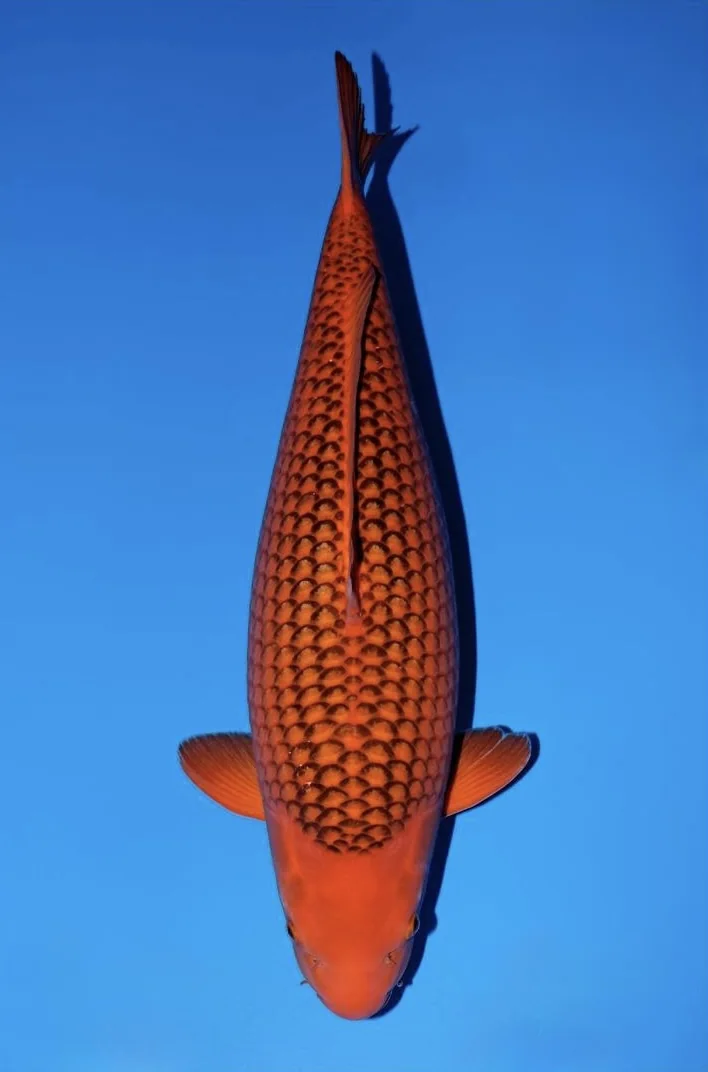 MatsubaAka MatsubaA red koi with dark centres on each scale, creating the classic pinecone effect.View variety →
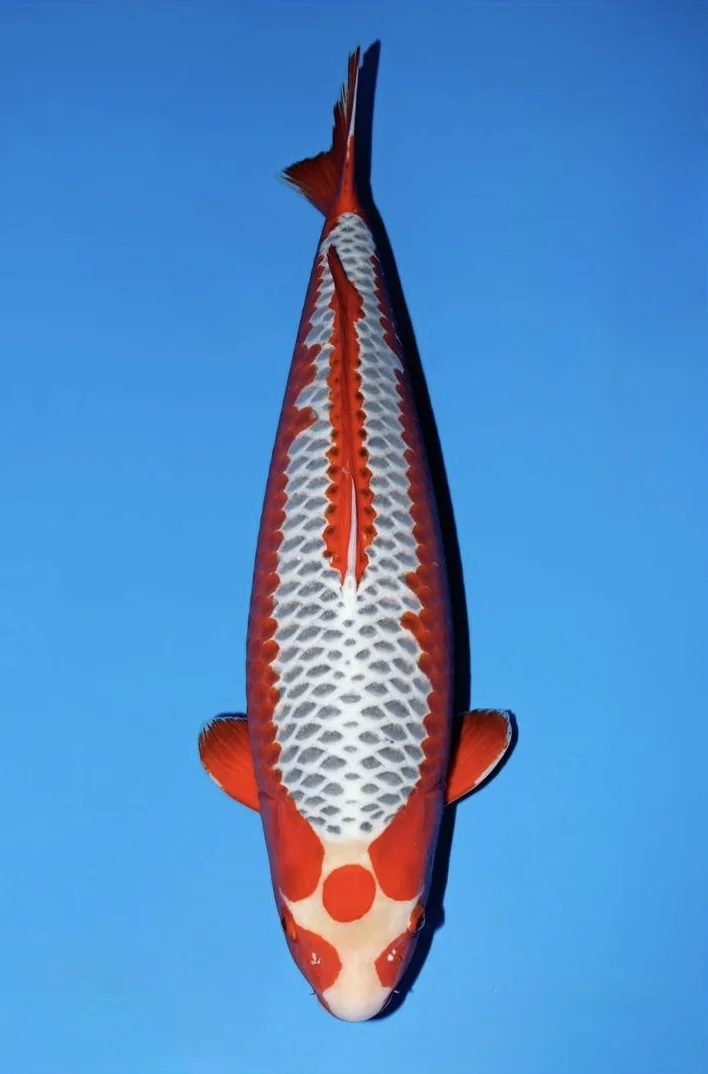 AsagiAsagiA historic variety with blue-grey reticulated scales and warm red along the cheeks, fins and lower body.View variety →
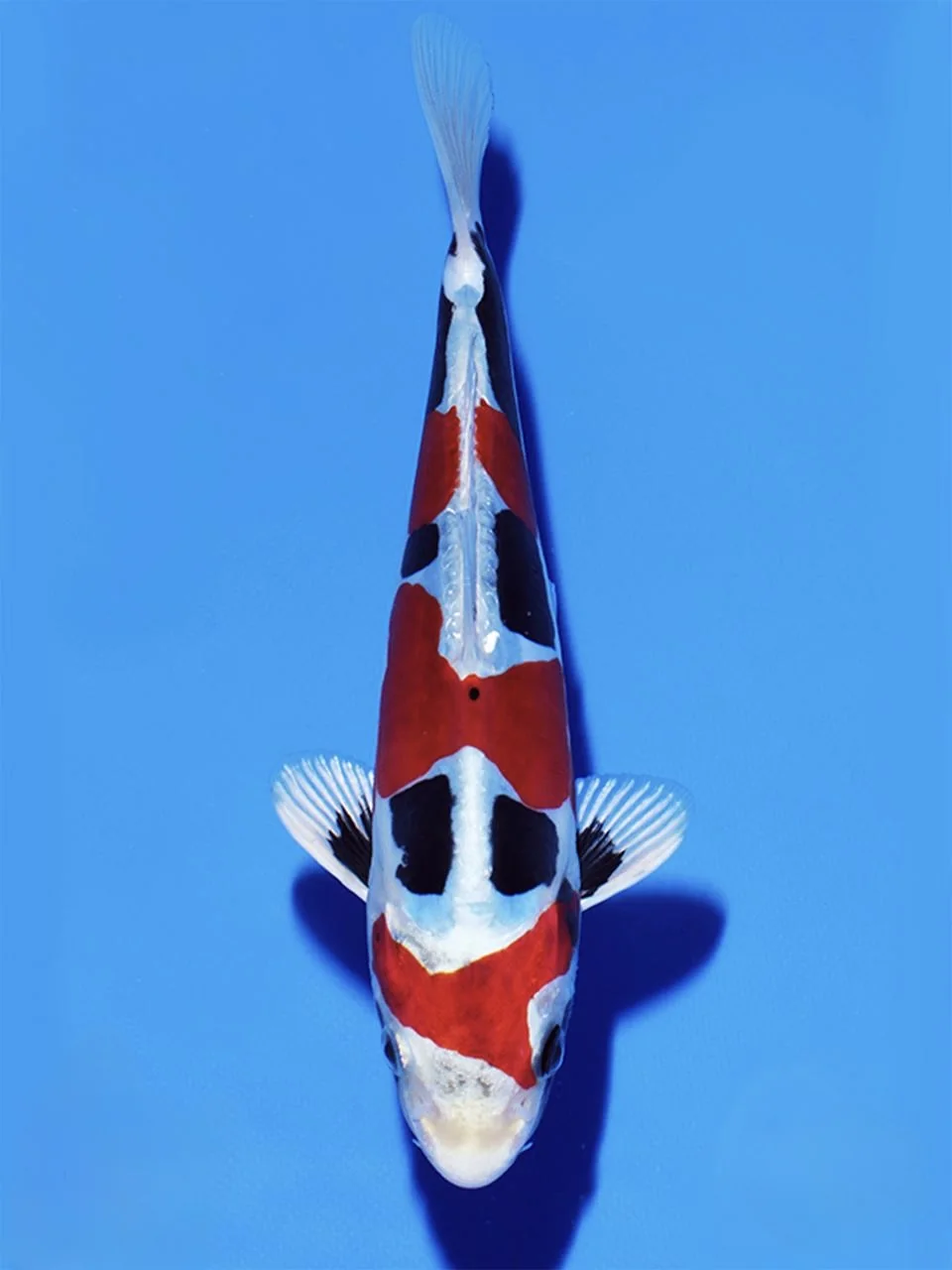 Metallic DoitsuBeni KikokuryuA metallic, largely scaleless koi combining white, black and red in a dramatic changing pattern.View variety →
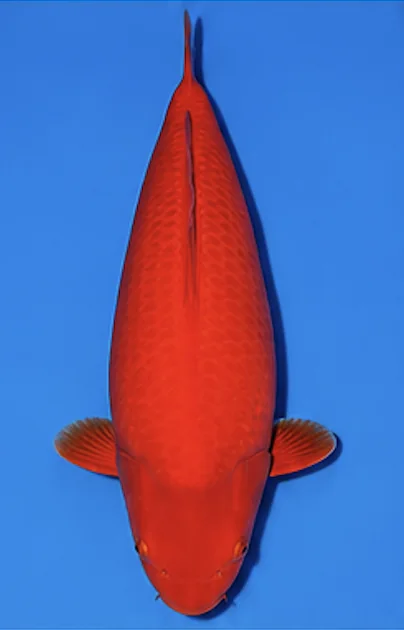 Solid colourBenigoiA non-metallic, single-coloured koi in a rich red or orange-red tone.View variety →
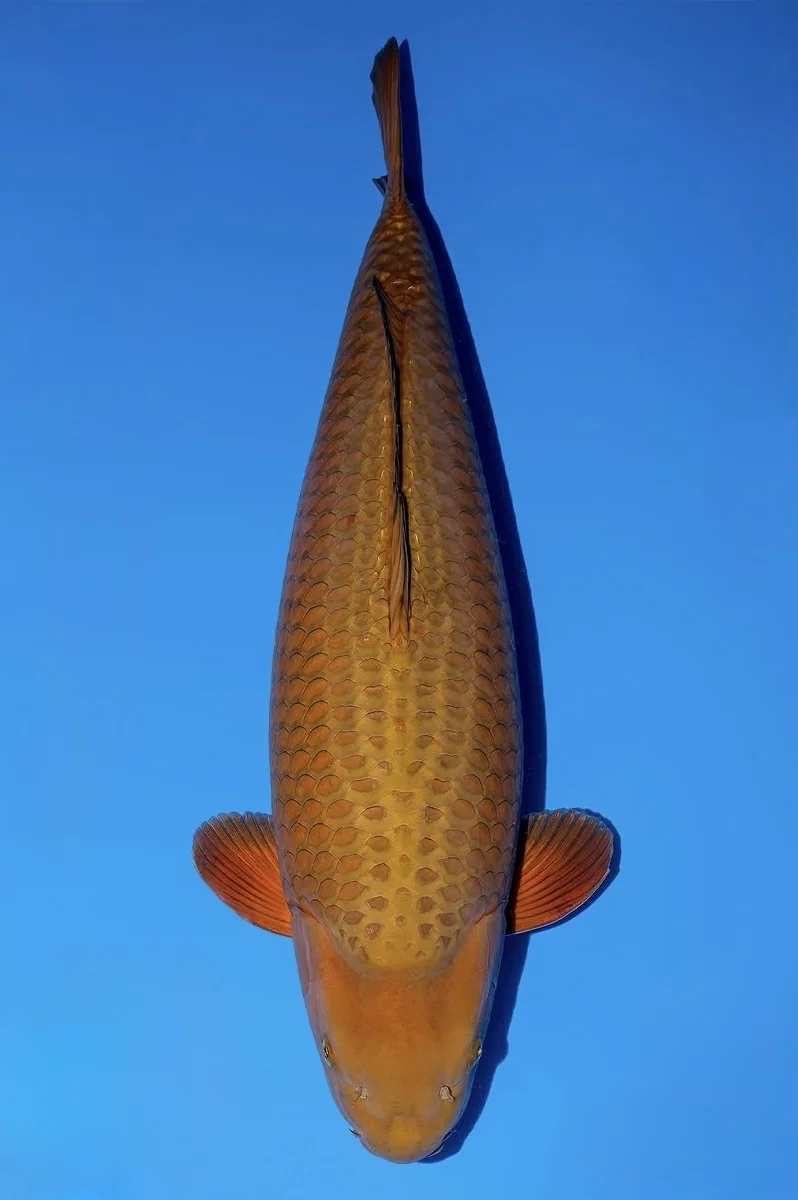 Solid colourChagoiA tea-brown to olive single-coloured koi, widely appreciated for steady growth and an approachable temperament.View variety →
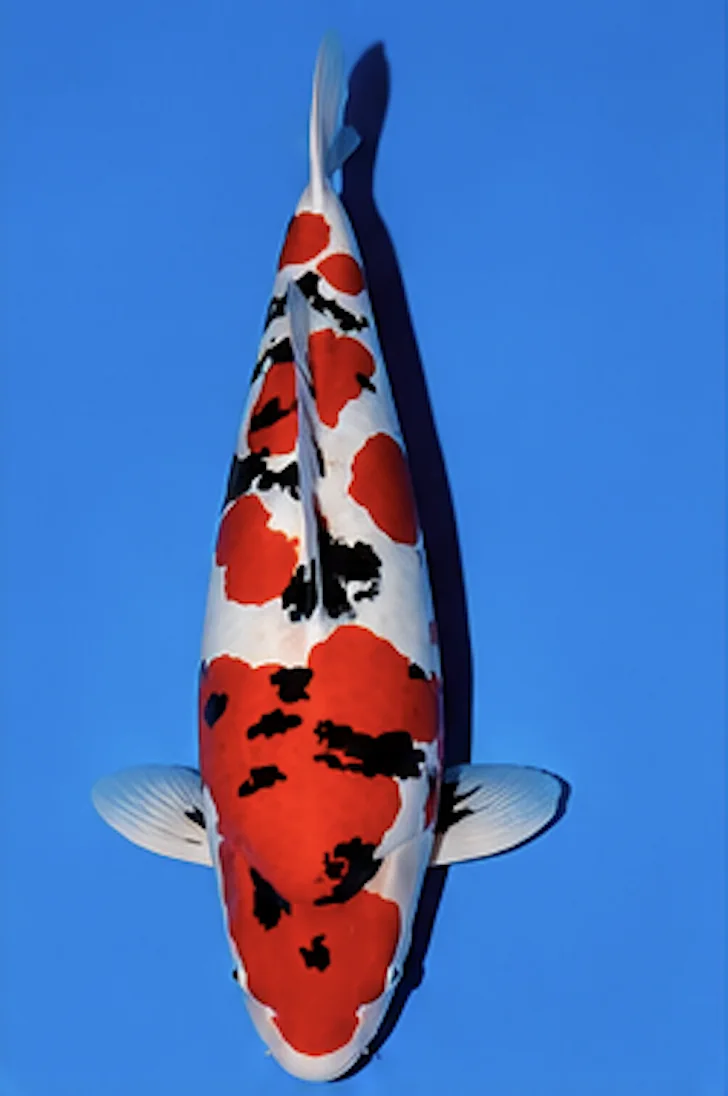 Doitsu Go-SankeDoitsu SankeA scaleless or sparsely scaled Sanke with red and black markings over a white ground.View variety →
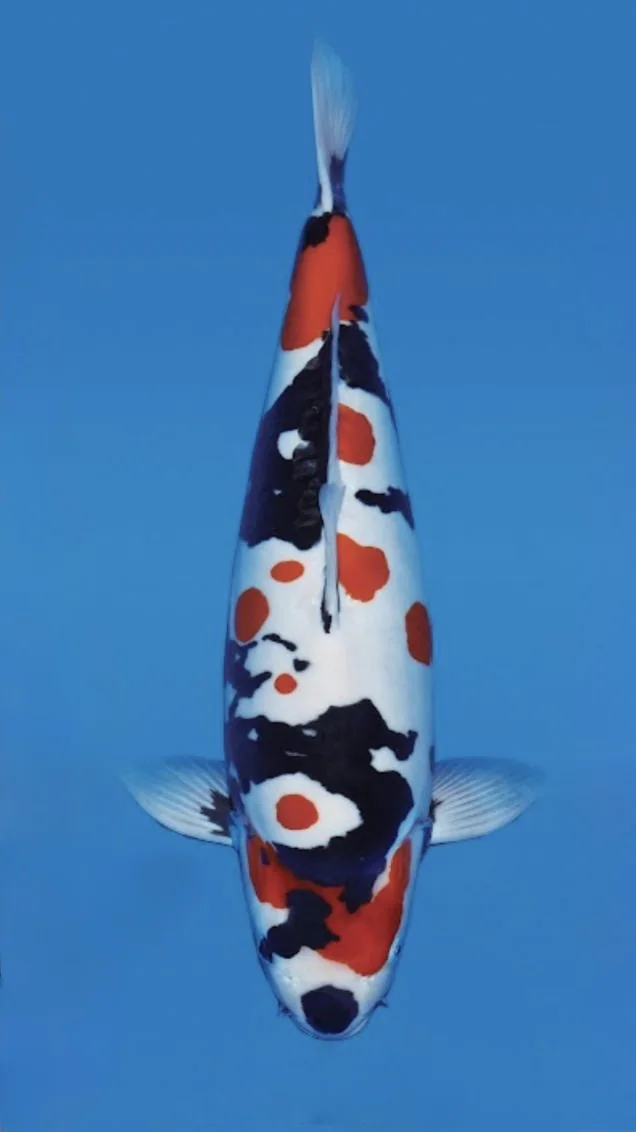 Doitsu Go-SankeDoitsu ShowaA Doitsu form of Showa, displaying bold black, red and white over smooth skin.View variety →
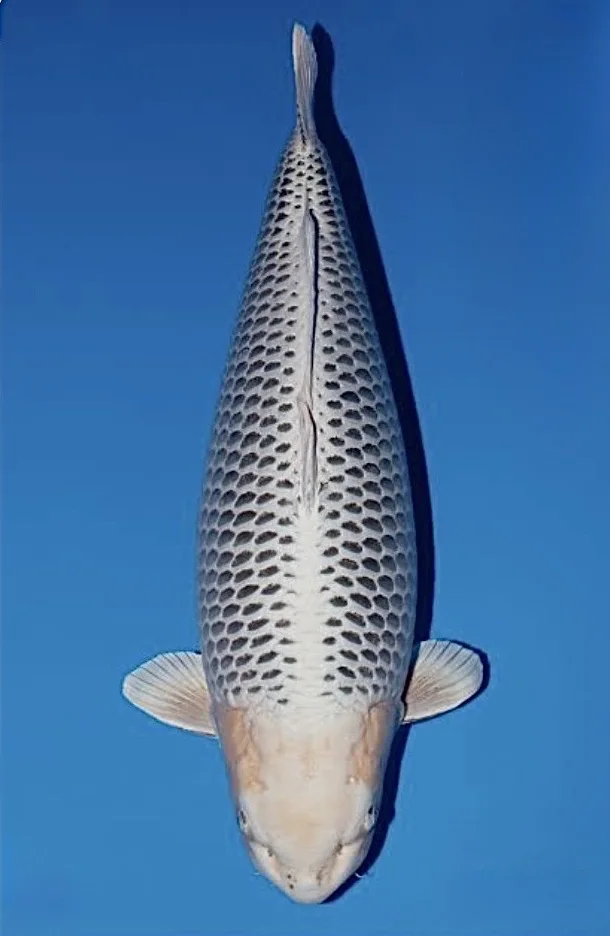 Metallic MatsubaGin MatsubaA silver metallic koi with dark scale centres forming a refined pinecone pattern.View variety →
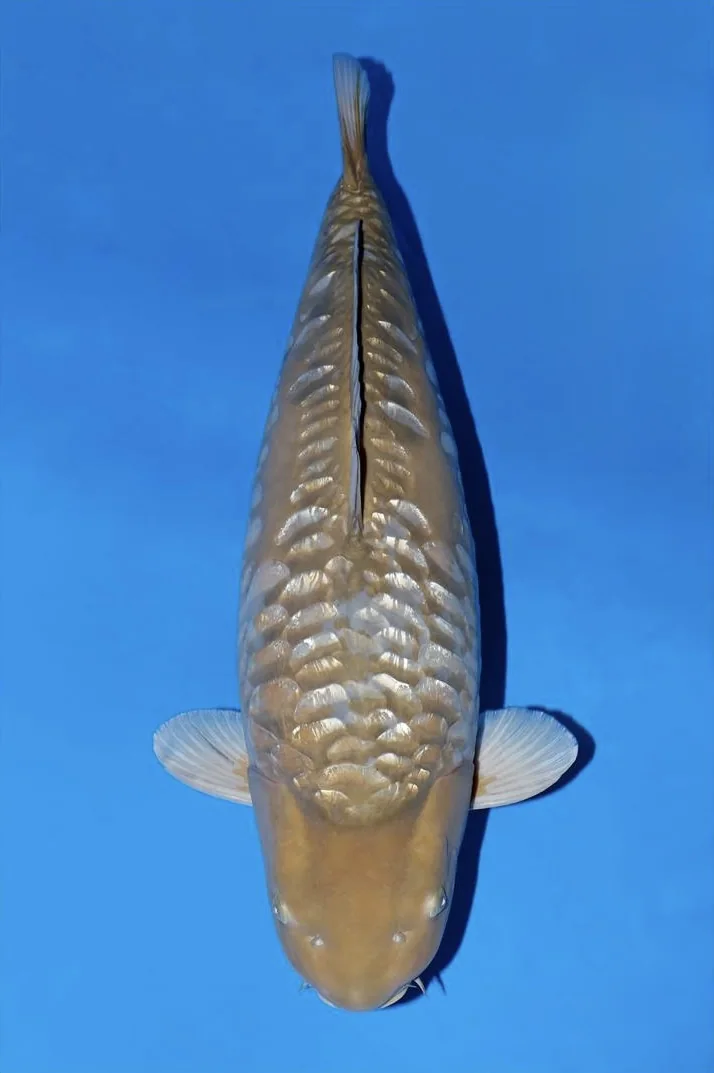 Ginrin KawarimonoGinrin AragokeA sparkling koi whose unusually large scales create a rugged, armoured texture.View variety →
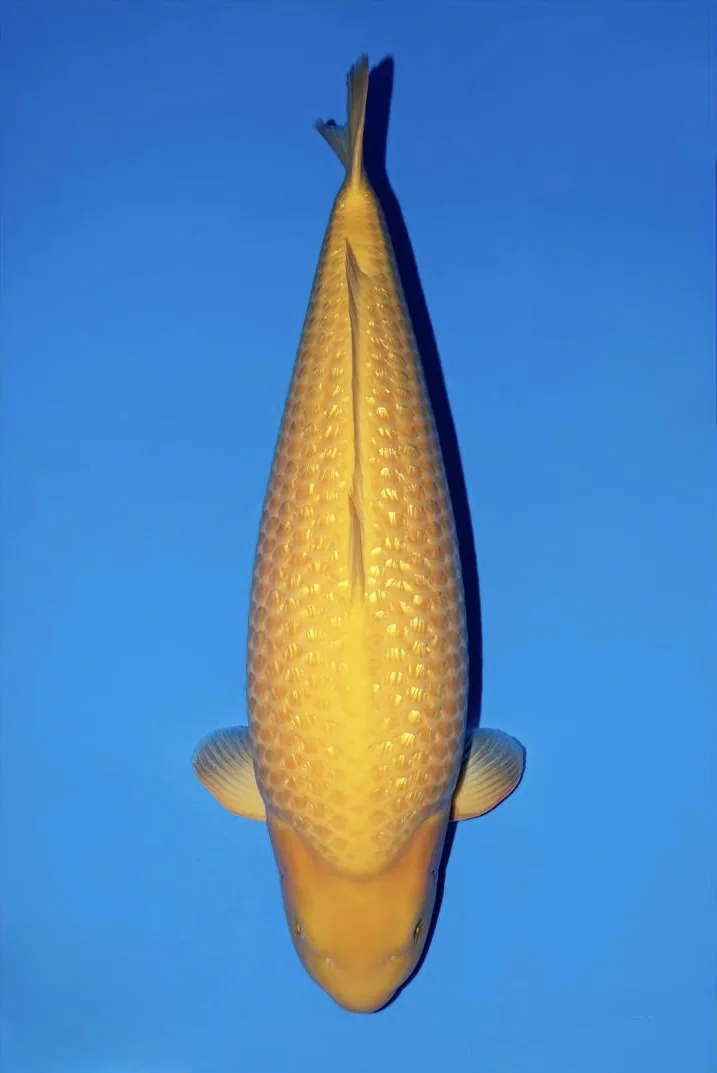 Ginrin solid colourGinrin KarashiA mustard-yellow Karashigoi enhanced by reflective Ginrin scales.View variety →
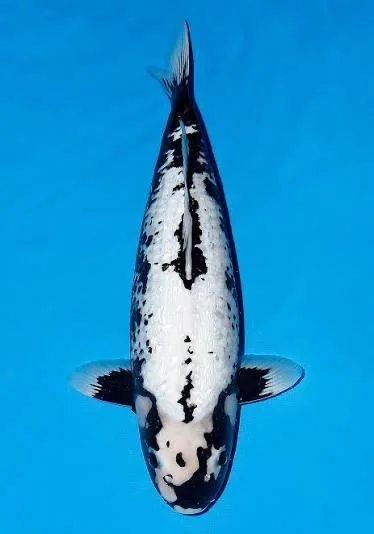 Ginrin KawarimonoGinrin MatsukawabakeA black-and-white koi with reflective scales and a pattern known for changing over time.View variety →
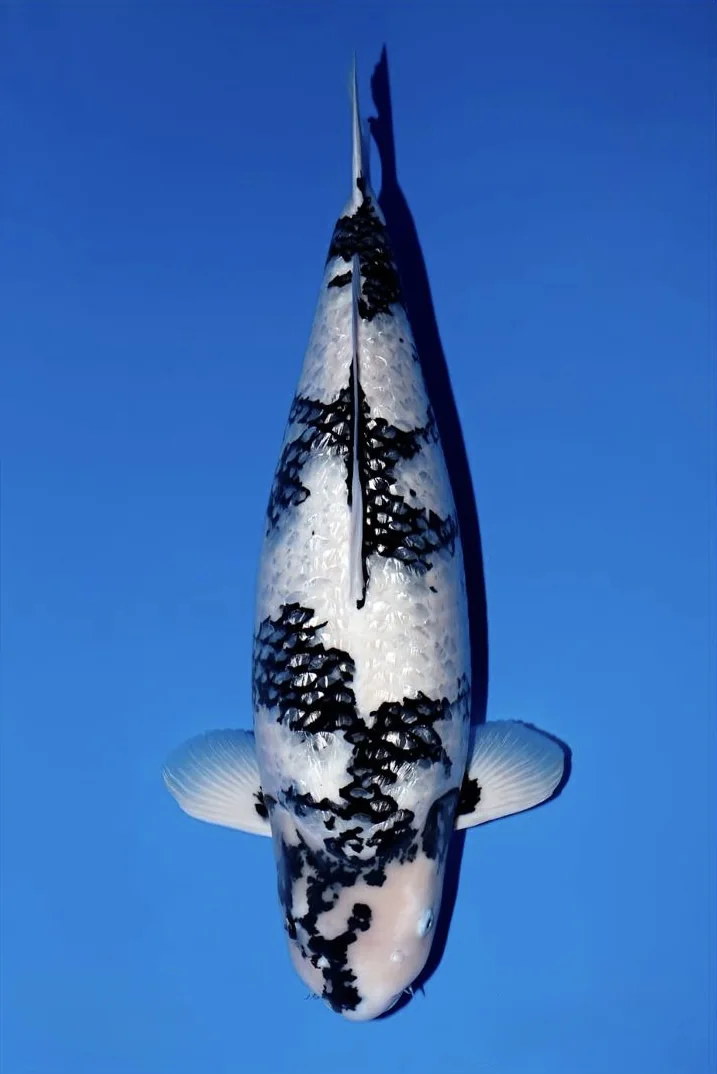 Ginrin UtsurimonoGinrin Shiro UtsuriA black-and-white Shiro Utsuri lifted by rows of reflective Ginrin scales.View variety →
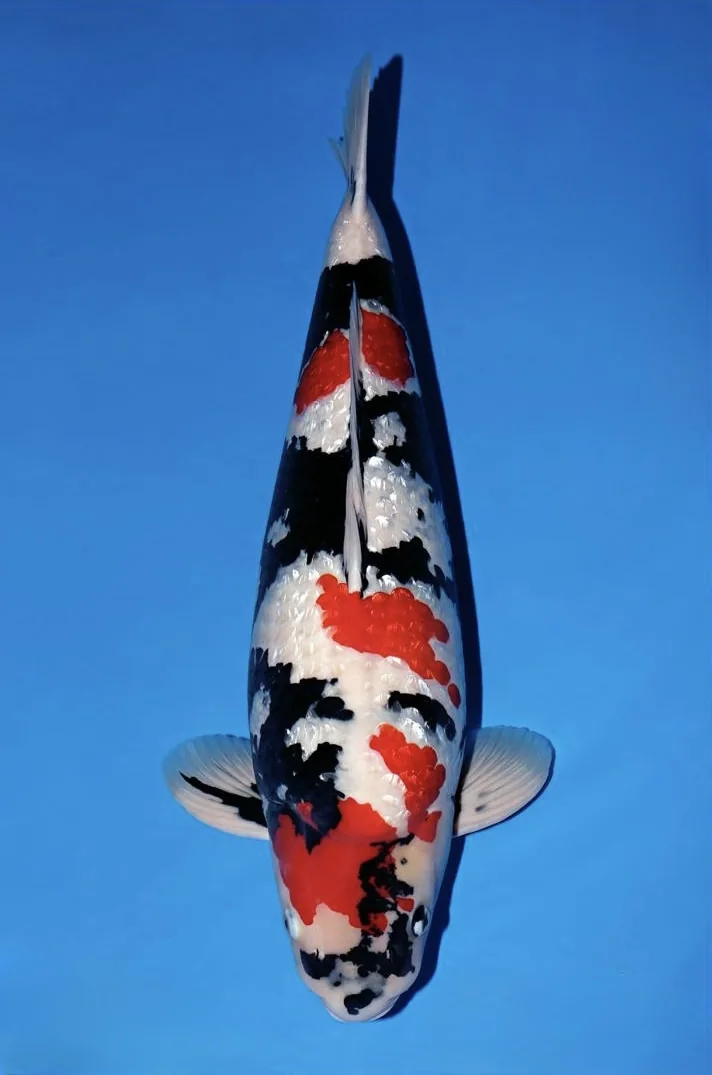 Ginrin Go-SankeGinrin ShowaA Showa whose red, white and black pattern is overlaid with reflective Ginrin scales.View variety →
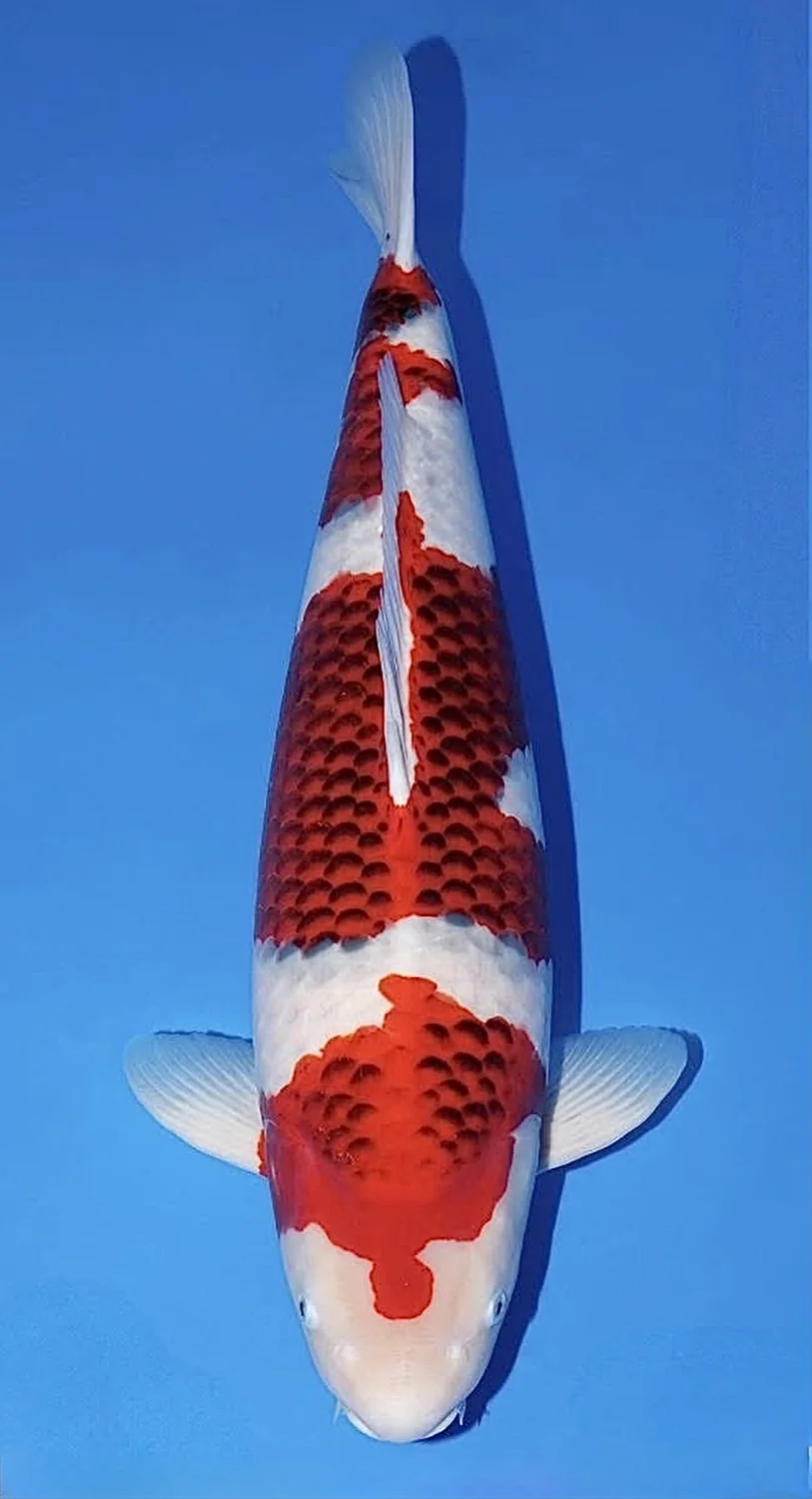 KoromoGoromoA white-based koi whose red pattern carries delicate blue or dark reticulated edging.View variety →
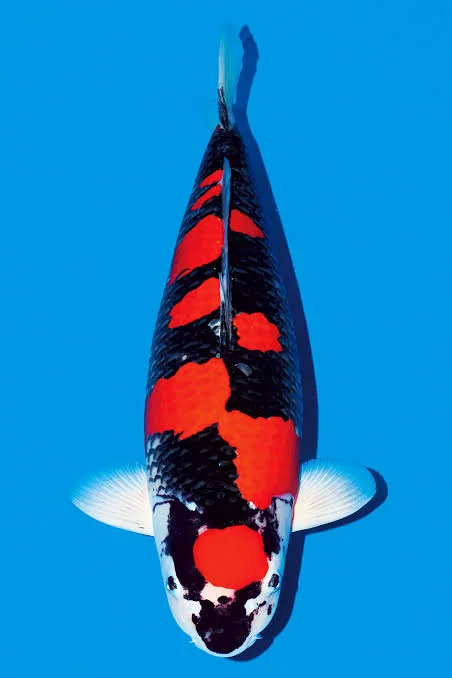 GoshikiGoshikiA richly layered koi combining a reticulated ground with contrasting red patterning.View variety →
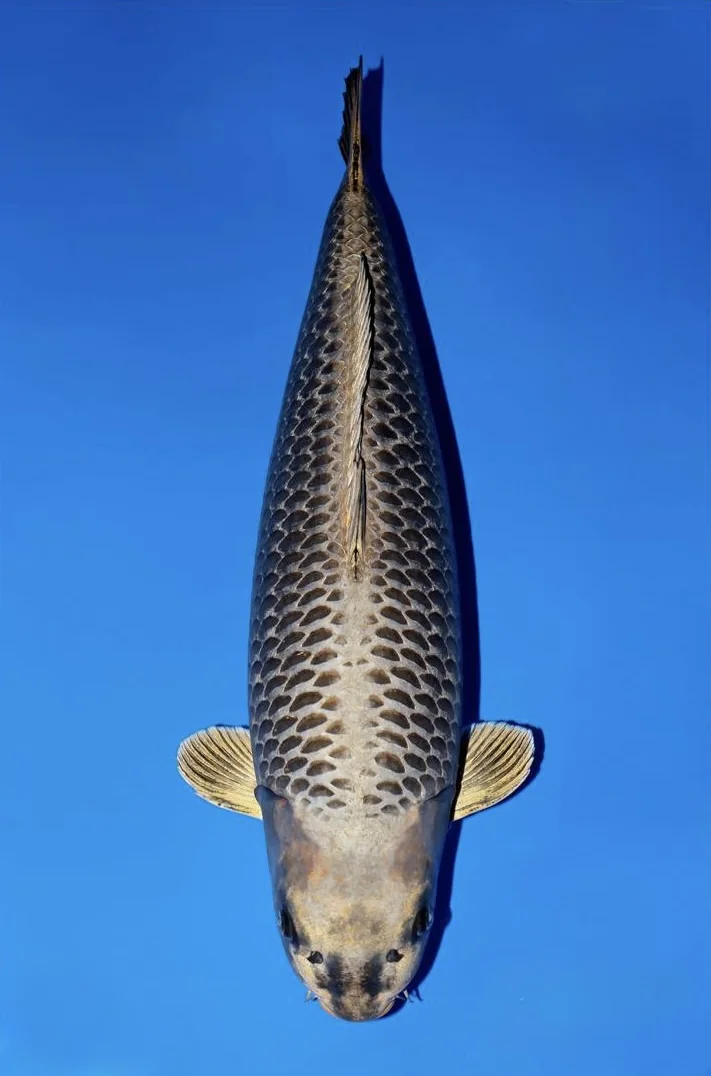 Metallic KawarimonoKin KabutoA dark metallic koi with gold-toned highlights suggesting the sheen of a Japanese helmet.View variety →
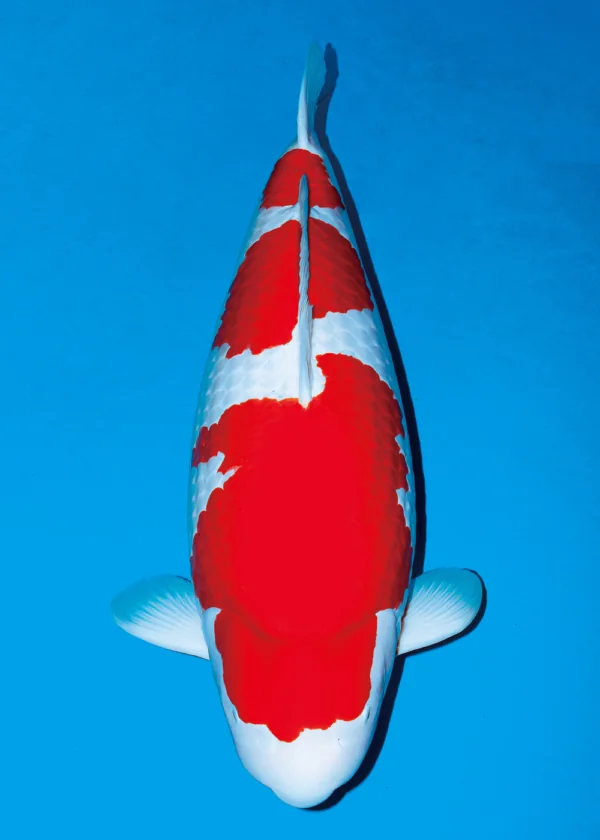 Go-SankeKohakuThe classic white koi with red markings, prized for purity, balance and apparent simplicity.View variety →
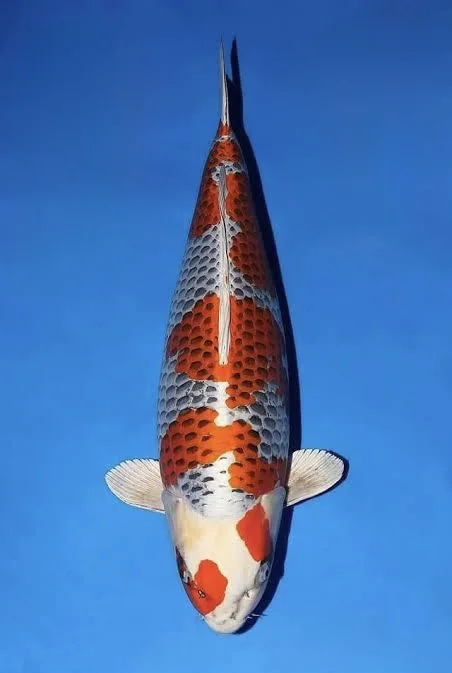 Hikari MoyomonoKujakuA metallic white koi with dark pinecone reticulation and orange-red patterning.View variety →
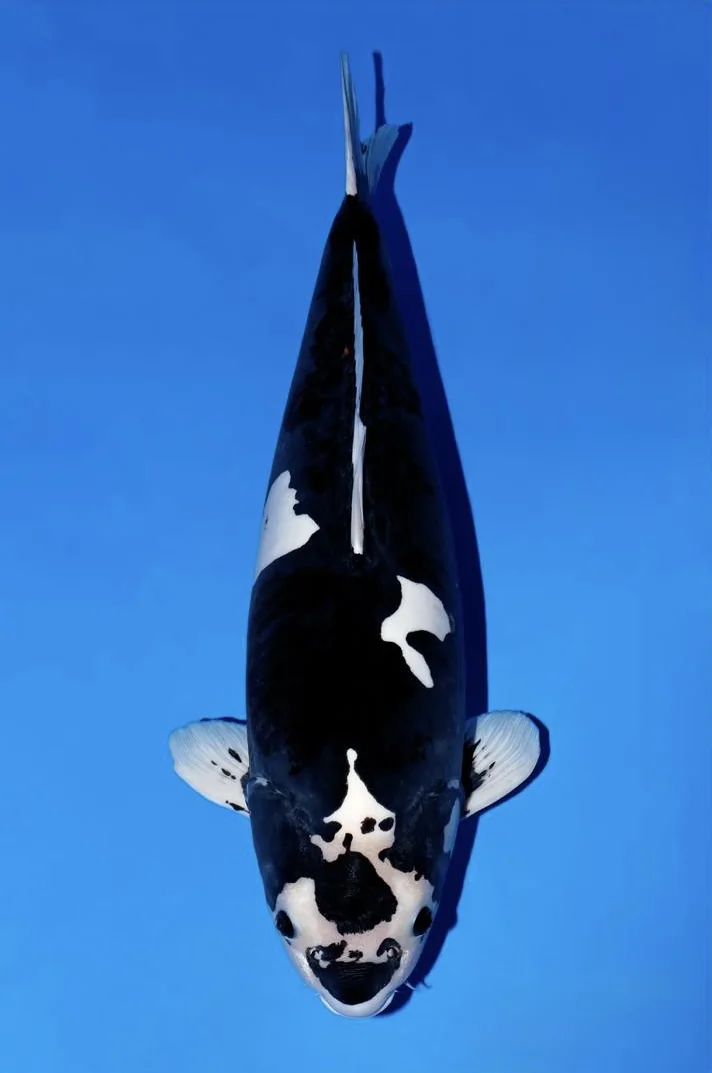 Doitsu KawarimonoKumonryuA black-and-white Doitsu koi famous for sumi that can appear, recede and transform.View variety →
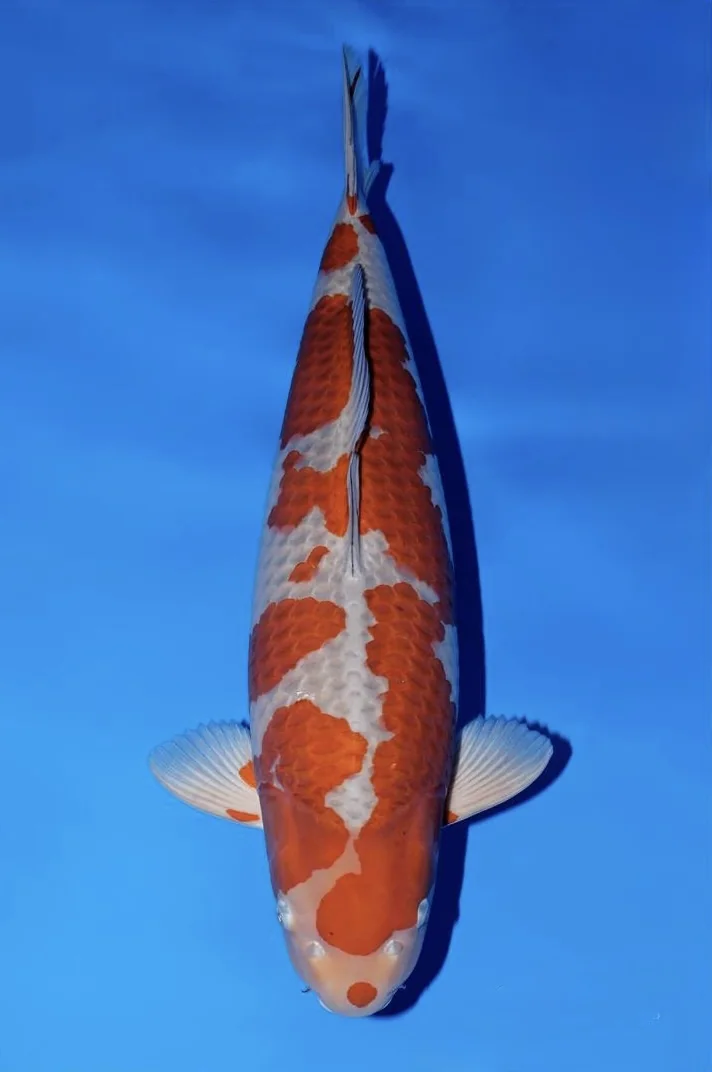 KawarimonoOchibaA blue-grey koi patterned with bronze or tea-brown, recalling autumn leaves on water.View variety →
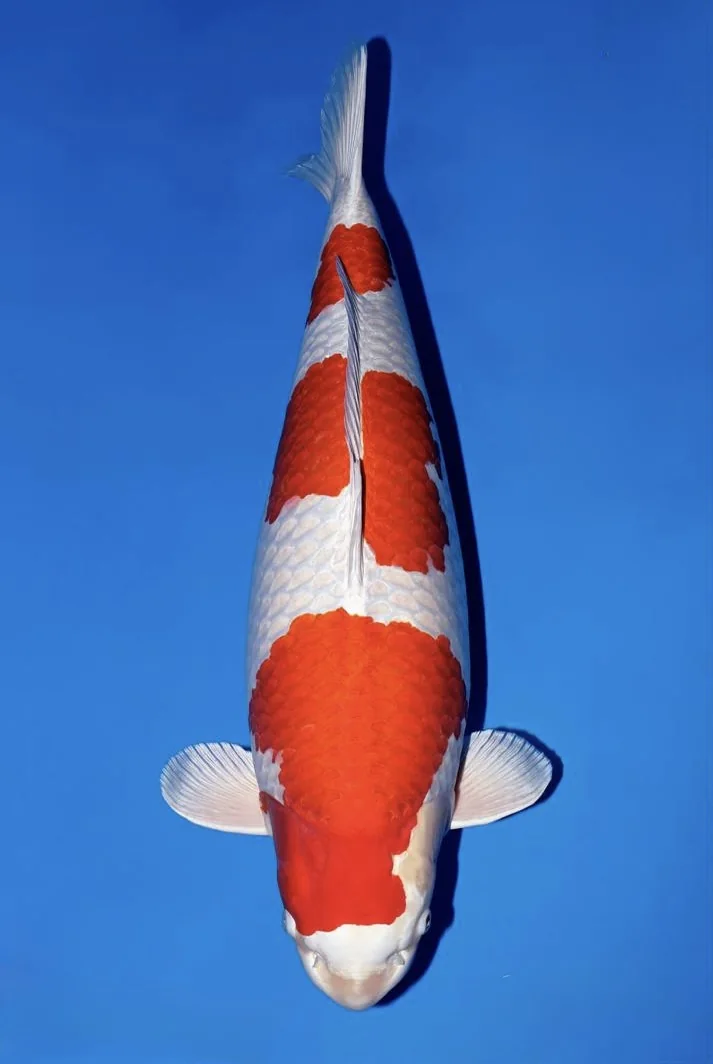 HikarimujiSakura OgonA single-coloured metallic koi with a soft pink, peach or reddish-gold cast.View variety →
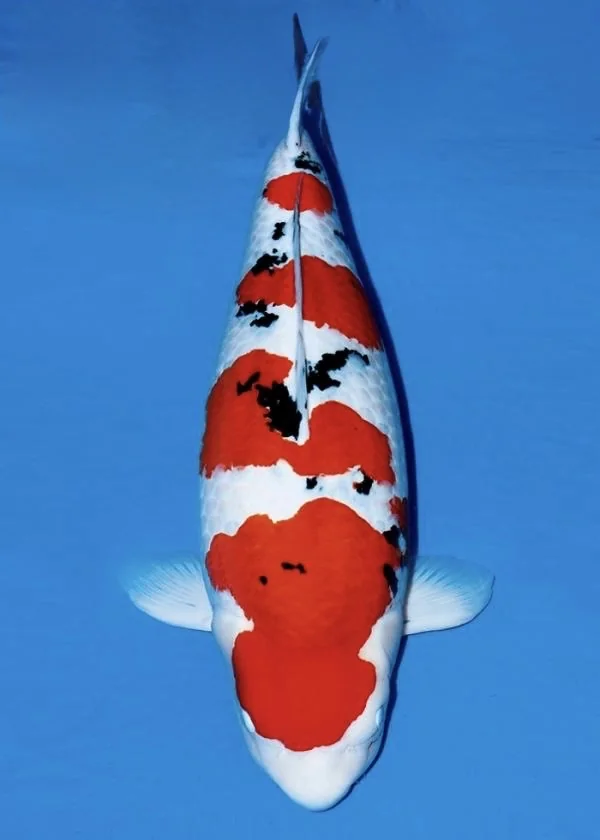 Go-SankeSankeA white-based koi carrying red pattern and carefully placed black accents.View variety →
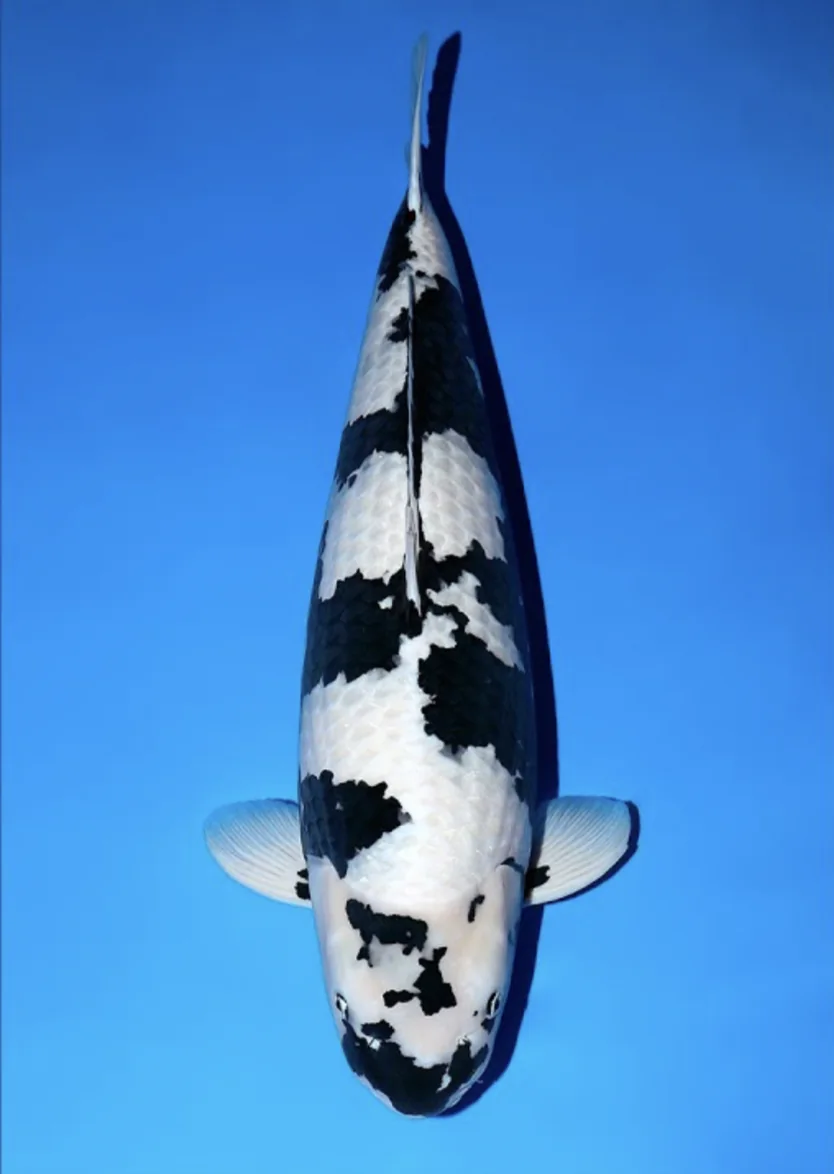 UtsurimonoShiro UtsuriA bold black-and-white koi whose sumi wraps around the body in a dynamic pattern.View variety →
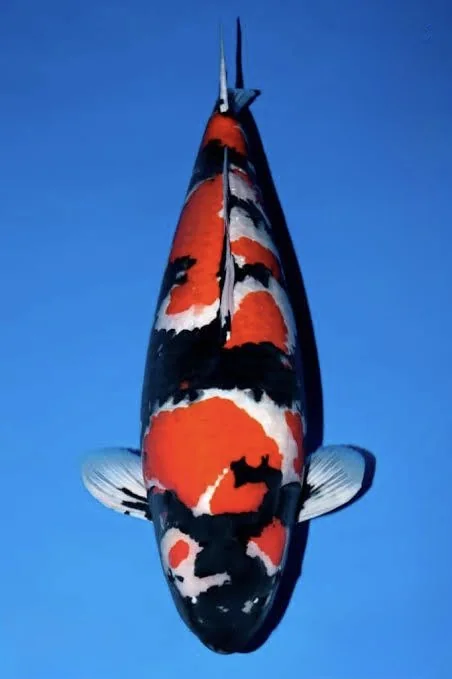 Go-SankeShowaA powerful three-colour koi in which black, red and white form an integrated pattern.View variety →
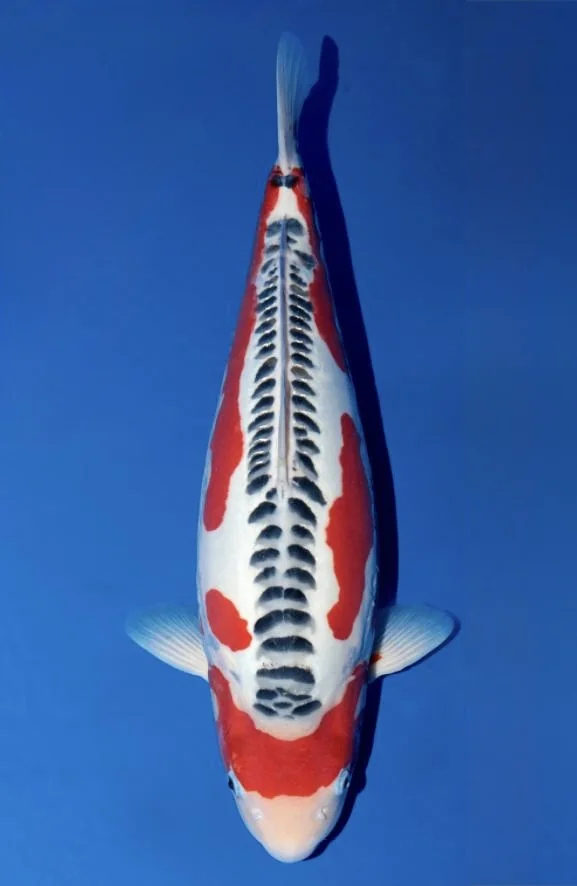 Doitsu Asagi lineageShusuiA Doitsu relative of Asagi with a pale blue body, red accents and prominent dorsal scales.View variety →
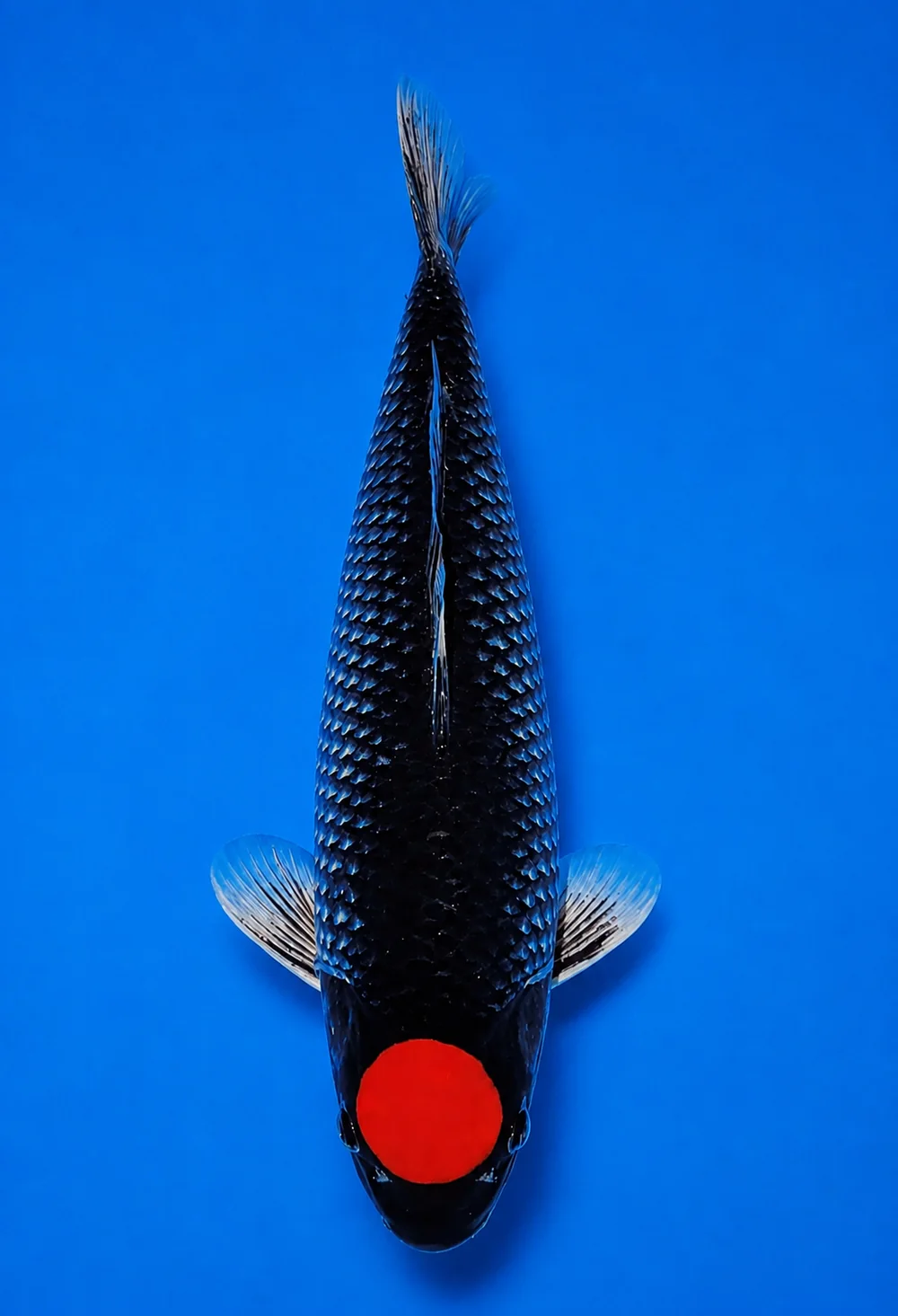 Tancho / GoshikiTancho GoshikiA Goshiki with a single red head marking and no other red pattern on the body.View variety →
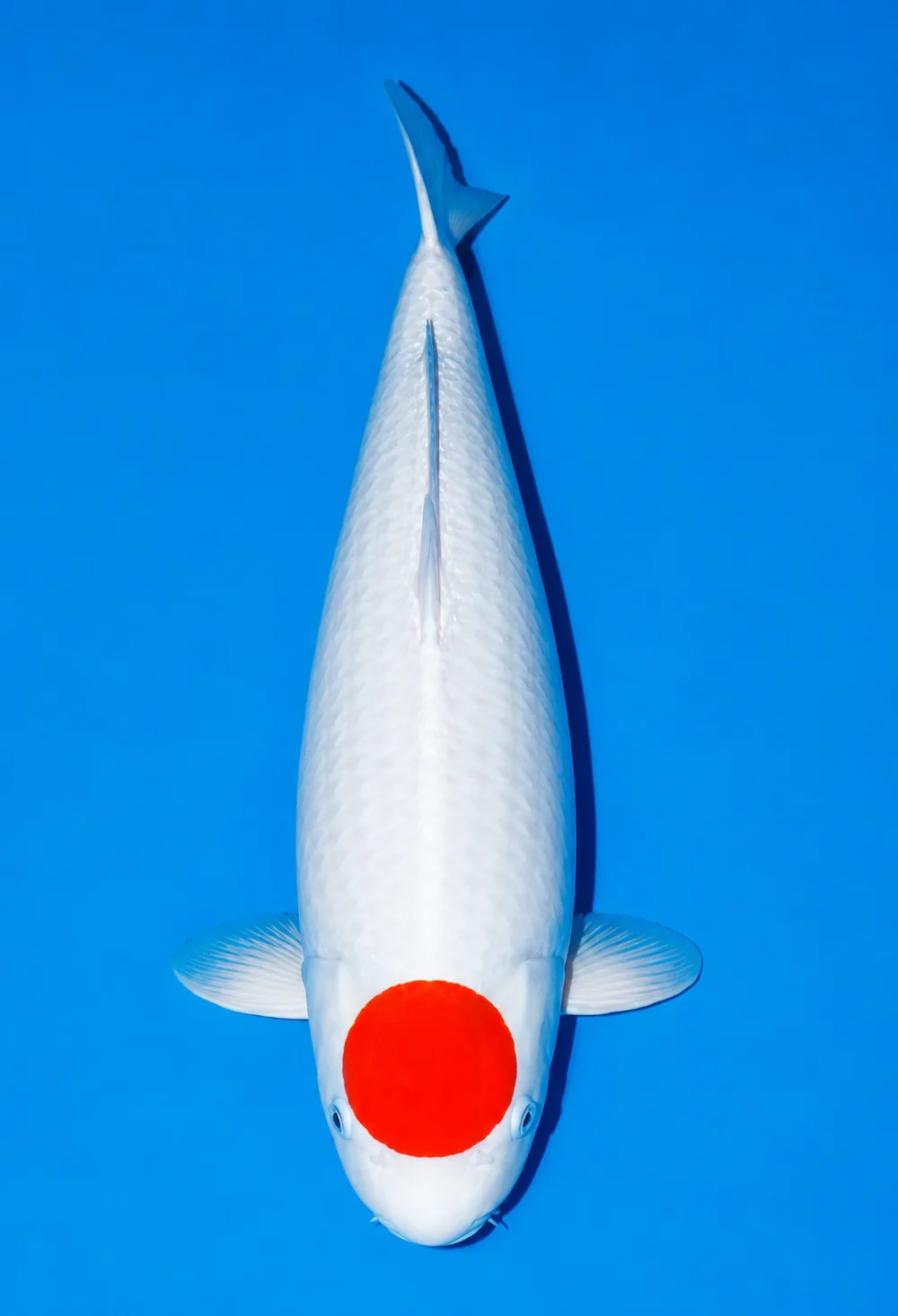 TanchoTancho KohakuA white koi defined by one isolated red marking on the head and no red elsewhere.View variety →
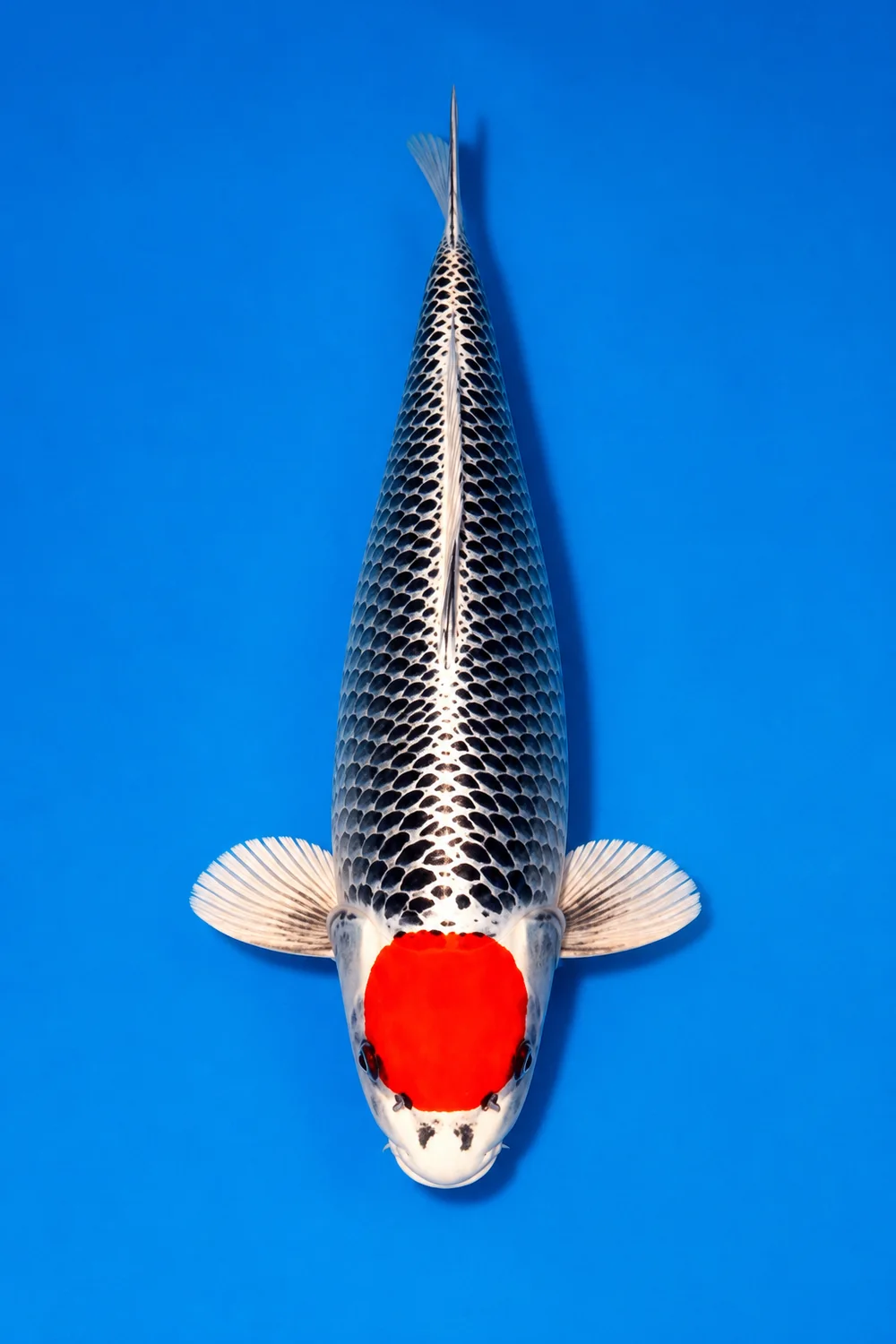 Tancho / Hikari MoyomonoTancho KujakuA metallic Kujaku carrying one red head marking over a silver reticulated body.View variety →
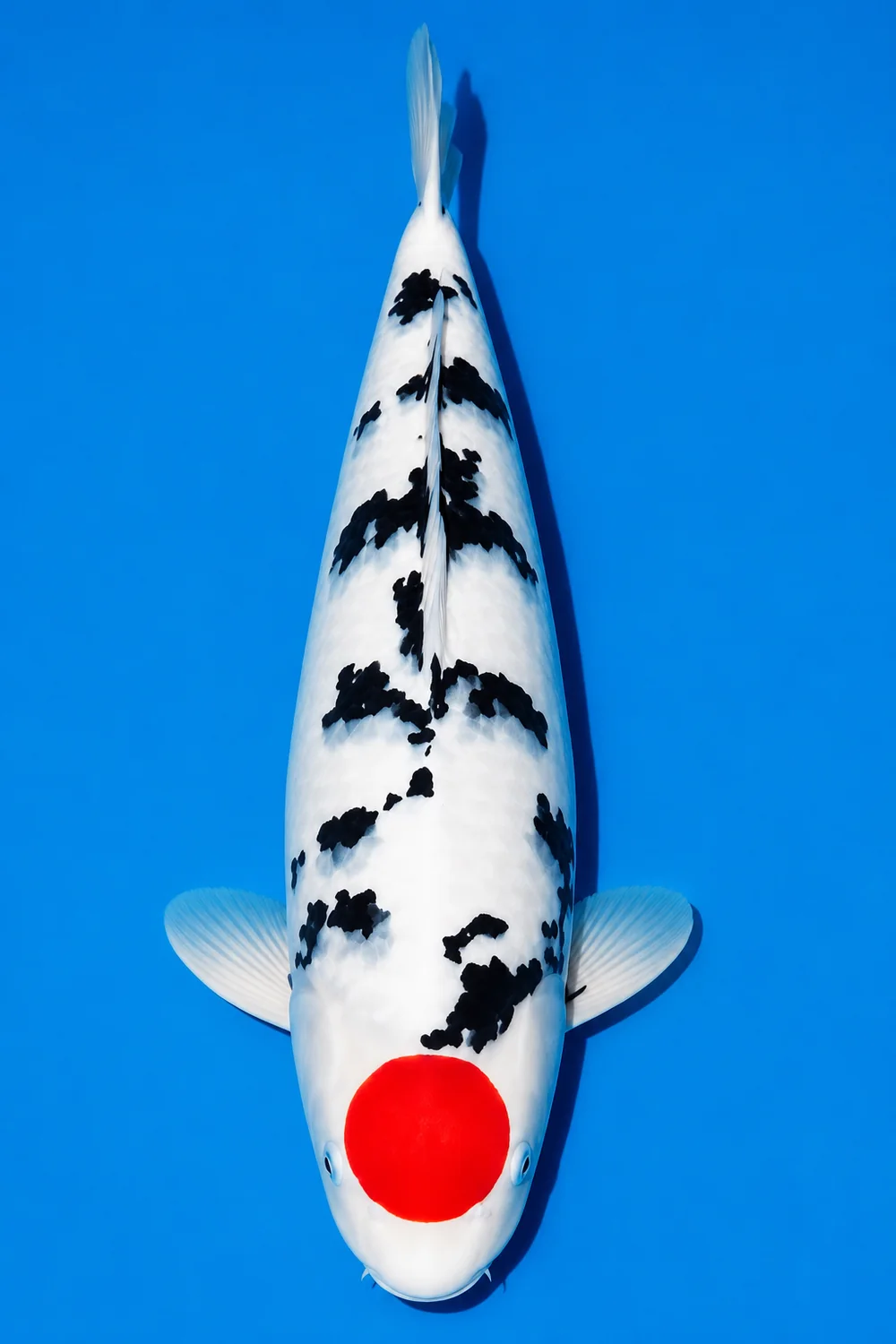 Tancho / Go-SankeTancho SankeA white Sanke with a single red head marking and black accents on the body.View variety →
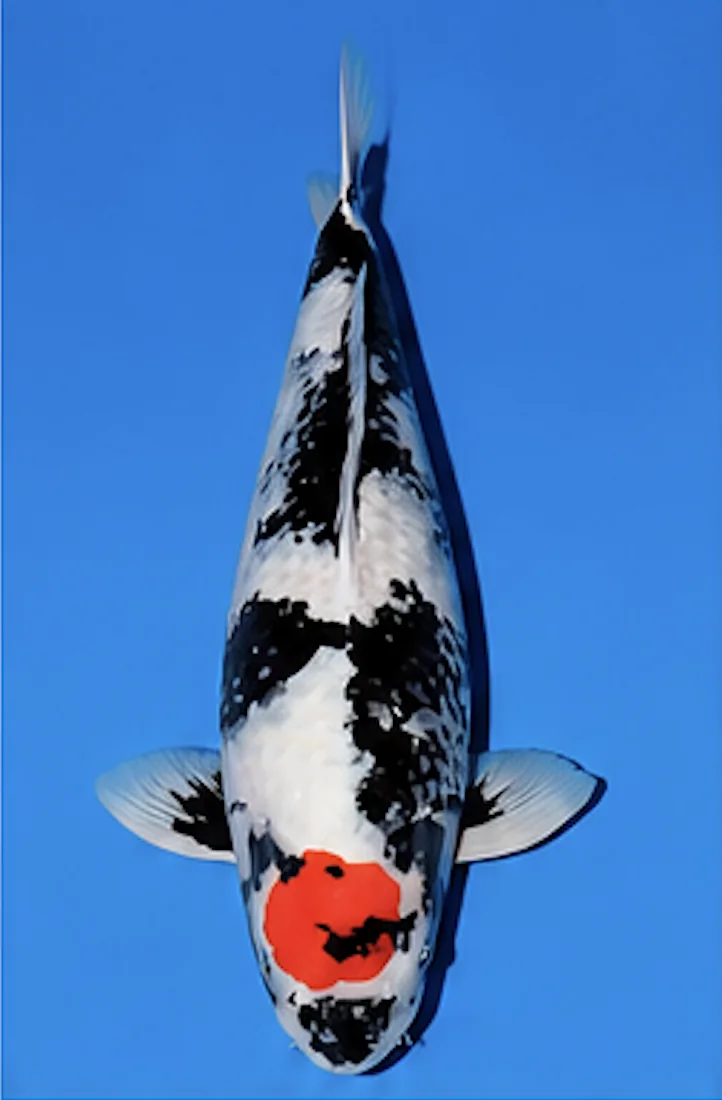 Tancho / Go-SankeTancho ShowaA Showa with one red head marking, while black and white form the remaining body pattern.View variety →
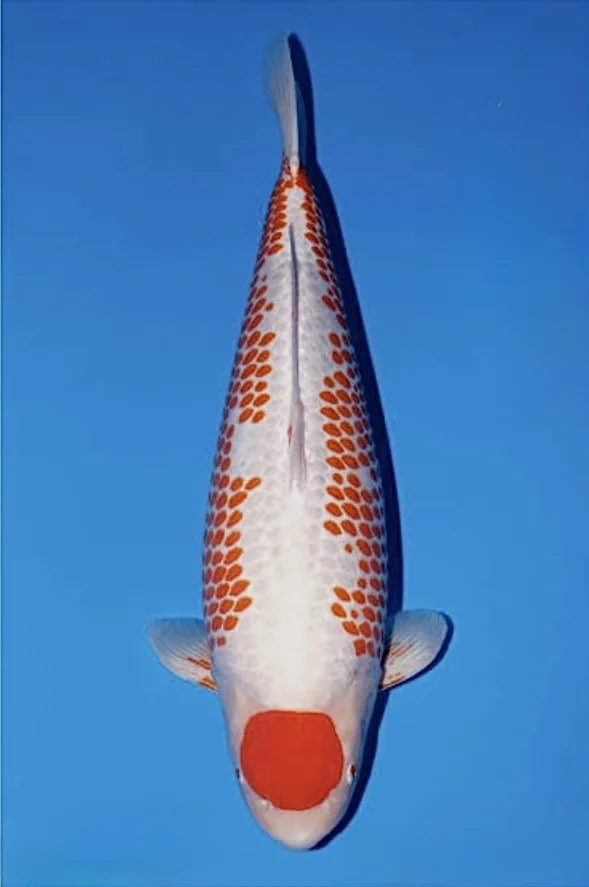 Asagi lineageYuki AsagiA pale, frost-toned Asagi expression with restrained blue-grey reticulation and soft red accents.View variety →
Reference note: variety names follow the supplied labels. Appearance changes with age and environment, and formal show classification may differ.
Koi identification guides
Aka Matsuba
About this variety
Aka Matsuba combines an even red ground with orderly matsuba reticulation. The pattern should read consistently from shoulder to tail without muddy patches.
What to notice
Look for clean head colour, an even red tone, balanced scale netting and fins that complement the body.
Asagi
About this variety
Asagi is valued for a calm blue ground and orderly net pattern. Red usually develops below the lateral line and may appear on the cheeks and fin joints.
What to notice
Look for a clean pale head, even reticulation and red that remains balanced rather than climbing too heavily over the back.
Beni Kikokuryu
About this variety
Beni Kikokuryu adds red patterning to the black-and-white metallic Kikokuryu. Its sumi can shift with season, water and maturity, so appearance may evolve noticeably.
What to notice
Look for strong metallic lustre, clean red, purposeful black placement and a balanced pattern that remains readable as the sumi changes.
Benigoi
About this variety
Benigoi has no contrasting body pattern, so colour quality, body shape and skin condition carry the visual impact. The best examples appear deep and even from head to tail.
What to notice
Look for consistent colour without pale patches, clean fins, healthy skin and a strong, well-proportioned frame.
Chagoi
About this variety
Chagoi is understated rather than patterned. Its scale alignment, soft netting, broad body and uniform earthy colour create its appeal; individual behaviour still varies.
What to notice
Look for an even ground colour, clean scale rows, a broad head and a powerful body with smooth movement.
Doitsu Sanke
About this variety
The Doitsu skin makes every colour edge highly visible. Like Sanke, the design is led by white and red, with black used as an accent rather than a dominant base.
What to notice
Look for clean white skin, crisp red plates, balanced black accents and tidy dorsal scales where scales are present.
Doitsu Showa
About this variety
Without a full scale covering, the powerful Showa pattern appears especially graphic. Black may wrap around the body and commonly contributes to the head design.
What to notice
Look for balanced colour across the whole fish, clean skin, confident sumi and orderly dorsal scales where present.
Gin Matsuba
About this variety
Gin Matsuba pairs a bright platinum-like ground with uniform matsuba reticulation. Because the design is simple, lustre and scale order are especially important.
What to notice
Look for an unblemished head, bright metallic shine, straight scale rows and netting of consistent strength.
Ginrin Aragoke
About this variety
Aragoke means rough or coarse scales. Ginrin reflections add light to that exaggerated scale structure, making texture the main feature rather than a conventional pattern.
What to notice
Look for healthy skin, clear reflective scales and a scale arrangement that feels distinctive yet visually balanced.
Ginrin Karashi
About this variety
The warm single-colour ground gives Ginrin reflections room to stand out. Body development, colour evenness and the distribution of sparkling scales shape the overall quality.
What to notice
Look for a broad frame, even mustard tone and several orderly rows of bright, consistent Ginrin.
Ginrin Matsukawabake
About this variety
Matsukawabake can alter its black pattern with season, water conditions and maturity. Ginrin adds sparkle across this dynamic monochrome design.
What to notice
Look for clean white areas, attractive current sumi placement, bright Ginrin and a body shape that remains the foundation as the pattern changes.
Ginrin Shiro Utsuri
About this variety
The underlying Utsuri pattern should remain strong enough to read beneath the sparkle. Black typically wraps around the body rather than sitting only as isolated spots.
What to notice
Look for clean white, deep sumi, balanced wrapping pattern and Ginrin that is aligned rather than scattered.
Ginrin Showa
About this variety
Ginrin adds brilliance to the already powerful Showa design. The sparkle should enhance, not obscure, the relationship between the three colours.
What to notice
Look for a strong body, coherent head pattern, deep sumi, clean red and white, and orderly reflective scale rows.
Goromo
About this variety
Goromo begins with a Kohaku-like red-and-white design, then adds refined scale shading within the red areas. This creates depth without becoming a full-body net pattern.
What to notice
Look for clean white skin, strong red plates and even reticulation confined neatly within the intended pattern.
Goshiki
About this variety
Goshiki means five colours, reflecting the blend of white, red, black and blue-grey tones that can appear. Ground colour and reticulation often deepen as the koi matures.
What to notice
Look for vivid red that remains readable, an even net pattern and a pleasing balance between brightness and darker ground tones.
Kin Kabuto
About this variety
Kin Kabuto belongs to an older metallic group whose naming can vary between breeders. Its appeal comes from the contrast between a dark body and warm metallic lustre.
What to notice
Look for a clean head, strong shine, an even dark ground and gold highlights balanced across the body.
Kohaku
About this variety
Kohaku has no black pattern: its character comes from luminous white skin and well-positioned red plates. Pattern styles vary, but the design should complement the body from head to tail.
What to notice
Look for clean white, even red with defined edges, a pleasing head marking and balanced spacing along the body.
Kujaku
About this variety
Kujaku combines bright lustre, matsuba netting and a Kohaku-like red design. These three layers should remain distinct rather than competing with one another.
What to notice
Look for a clean metallic head, even reticulation, bright red pattern and strong shine extending through the fins.
Kumonryu
About this variety
Kumonryu means nine-crested dragon. Its smooth skin and changing black pattern create a fluid, ink-like appearance that may differ markedly between seasons.
What to notice
Look for clean skin, an engaging current pattern and good body structure; future markings cannot be predicted precisely.
Ochiba
About this variety
Ochiba Shigure combines cool ground colour with warm brown patterning. Scale reticulation can add texture, while broad colour blocks give the variety its calm, natural character.
What to notice
Look for clear contrast, balanced brown placement, orderly scales and a full body with unhurried movement.
Sakura Ogon
About this variety
Sakura Ogon is appreciated for luminous skin and a warm, delicate metallic tone. With no contrasting pattern, surface quality and body line must carry the fish.
What to notice
Look for even colour, uninterrupted lustre from head through fins, clean skin and a graceful, well-filled frame.
Sanke
About this variety
Taisho Sanke is visually led by the Kohaku-like white-and-red design. Black usually appears as accent markings on the body and generally does not dominate the head.
What to notice
Look for luminous white, strong red, lacquer-like black accents and a pattern that feels elegant rather than crowded.
Shiro Utsuri
About this variety
Shiro Utsuri is built on the interaction of deep black and clean white. Head sumi and black at the pectoral-fin bases often help unify the design.
What to notice
Look for strong contrast, balanced wrapping sumi, clean white skin and a head pattern with character.
Showa
About this variety
Showa traditionally develops from a black foundation, with sumi often appearing on the head and wrapping around the body. Modern Showa may show more white while retaining this structural character.
What to notice
Look for balance across all three colours, convincing head markings, strong sumi and black at the pectoral-fin bases.
Shusui
About this variety
Shusui was developed by crossing Asagi with Doitsu carp. Its smooth skin focuses attention on the paired line of large dark scales running along the back.
What to notice
Look for a clean head, clear blue ground, straight and evenly sized dorsal scales, and balanced red along the sides and cheeks.
Tancho Goshiki
About this variety
The isolated head mark provides a bold focal point against Goshiki’s layered, reticulated ground. Darker tones may develop as the fish matures.
What to notice
Look for a well-positioned head mark, clear separation from the body, even reticulation and balance as the ground changes.
Tancho Kohaku
About this variety
Tancho Kohaku is admired for disciplined simplicity. The head mark is often round, but placement, clean edges and harmony with the head shape matter more than perfect geometry alone.
What to notice
Look for luminous white skin, a centred stable-looking red mark, clean edges and no stray red on the body.
Tancho Kujaku
About this variety
This variety combines the focus of Tancho with Kujaku’s metallic lustre and matsuba netting. The body should remain free of additional red patterning.
What to notice
Look for a distinct head mark, bright lustre, clean silver ground and even reticulation that does not overpower the focal point.
Tancho Sanke
About this variety
Tancho Sanke keeps red confined to the head while sumi provides rhythm across the white body. Black generally remains away from the head in the classic expression.
What to notice
Look for a well-positioned red head mark, clean white, lacquer-like body sumi and balanced spacing from shoulder to tail.
Tancho Showa
About this variety
Unlike Tancho Sanke, Tancho Showa may carry sumi on the head. The isolated red mark must remain visually distinct within the stronger black-and-white design.
What to notice
Look for a clear red focal point, balanced wrapping sumi, clean white and a powerful pattern connecting head and body.
Yuki Asagi
About this variety
Yuki means snow, describing the lighter, cleaner impression of this Asagi type. Usage of the name can vary between breeders, so the individual fish should guide identification.
What to notice
Look for a bright head, delicate even netting, balanced red and an overall cool, uncluttered appearance.