
Koi First Aid: What to Do When You Find an Injured or Sick Fish
Educational guide · References and further reading below. Seek qualified advice for fish-health decisions.
A practical triage guide for stabilising koi, protecting water quality, handling injuries safely, deciding when to isolate, and knowing when professional diagnosis is urgent
Finding a koi gasping, bleeding, lying on its side, missing scales or developing an ulcer creates pressure to “do something” immediately. The most useful first action, however, is often not a medication. In fish medicine, many apparent emergencies begin with the environment: low dissolved oxygen, chlorine, ammonia, nitrite, pump failure, temperature change, chemical overdose or another system-level event. Merck Veterinary Manual notes that many pond and aquarium emergencies are environmental rather than primarily medical, which is why oxygen, circulation and water testing come before most drug decisions. [1,2]
First aid therefore means stabilising the fish and the system while preserving diagnostic information. It does not mean trying a sequence of chemicals until the koi looks better. A single torn scale after a collision is managed very differently from several koi gasping after a water change, or from a fish with petechiae, deep ulcers and rapidly worsening gills. The visible sign must be interpreted together with the number of fish affected, the time course, recent events, breathing, behaviour and water results.
This guide is written for koi keepers, dealers, farms, quarantine systems and high-value collections, including warm tropical conditions. It explains what to do during the first minutes and hours, how to examine a fish without making it worse, how to manage common injuries, when a hospital tank helps, what belongs in a koi first-aid kit, and when a veterinarian or diagnostic laboratory should take over.
| Central rule: first aid should reduce immediate danger and preserve options. Protect oxygen and water quality, minimise additional handling, document what you see, then choose the next step from evidence. |
|---|
Quick answer
When you find an injured or sick koi, look at the whole pond before catching the fish. Count how many koi are affected and check breathing, swimming, posture, location in the pond and response to food. If breathing is abnormal, several fish are involved, a treatment or water change was recent, or equipment has failed, increase reliable aeration immediately and test the water.
For a single local injury, provide clean, well-oxygenated, stable water, remove the source of trauma, photograph the lesion and avoid repeated handling. For a fish with severe respiratory distress, collapse, deep or rapidly expanding wounds, extensive haemorrhage, major gill injury, marked swelling, pop-eye, loss of balance or rapid decline, seek aquatic-veterinary or diagnostic support promptly. If contagious disease is plausible, stop fish movement and use dedicated equipment.
Do not add antibiotics, oxidisers, parasite treatments, anaesthetics or salt simply because the koi looks unwell. Treatment should follow a measured environmental problem, a confirmed parasite, a justified wound-care plan, culture/susceptibility evidence, or another supported diagnosis. Current fish-health guidance strongly discourages prophylactic medication without diagnostic justification. [1,3]
Emergency priorities
| Priority | What to do | Why it matters |
|---|---|---|
| 1. Oxygen | Increase dependable aeration and confirm water movement whenever breathing is abnormal or system failure is possible. | Hypoxia can kill quickly and magnifies almost every other disease problem. |
| 2. Water | Test temperature, pH, ammonia/TAN, nitrite and, when relevant, chlorine/total chlorine, KH/alkalinity, salinity and dissolved oxygen. | Clear water can still be chemically dangerous. |
| 3. Population pattern | Determine whether one fish or several are affected and reconstruct the previous 24-72 hours. | A shared sudden event strongly suggests an environmental or exposure problem. |
| 4. Minimise harm | Stop unnecessary catching, feeding during an acute pond-wide event, and blind chemical additions. | Handling and treatments themselves are stressors and can remove protective mucus. |
| 5. Evidence | Photograph lesions, record tests, and collect fresh diagnostic samples before treatment when safe. | Medication can alter microscopy and delay an accurate diagnosis. |
| 6. Escalation | Use biosecurity and contact qualified help when signs are severe, progressive, multiple or unexplained. | Fresh, representative samples are much more useful than decomposed fish later. |
1. First aid is stabilisation, not a diagnosis
A koi can be critically ill for environmental, infectious, parasitic, traumatic or internal reasons, and several of these can occur at once. Flashing, mucus, redness, lethargy and fast breathing are especially non-specific. A first-aid response should therefore do two things at the same time: reduce immediate physiological danger and avoid destroying the evidence needed to identify the cause.
Water quality is part of the patient. Fish breathe, osmoregulate, excrete and maintain acid-base balance through tissues that are in continuous contact with the water. Surface injury also increases osmoregulatory difficulty because the skin barrier has been damaged. [1] This is why the “hospital” for a koi begins with oxygenated, chemically stable water rather than a cabinet of medications.
The same principle applies to stress. Handling, transport, crowding, temperature change, low oxygen, poor water quality and disease treatments themselves can weaken protective barriers and alter immune function. UF/IFAS emphasises that management deficiencies should be corrected before or alongside disease treatment. [4]
2. Decide whether this is a pond emergency or an individual-fish problem
The fastest useful question is often not “What disease is this?” but “How many fish are affected?” A single koi with one local abrasion after spawning suggests a very different first pathway from six koi gasping at the surface after a large top-up. Population pattern is not a diagnosis, but it changes the priority list immediately.
| Observed pattern | Likely priority | Immediate direction |
|---|---|---|
| One superficial scrape or missing scale; fish upright, responsive and breathing normally | Same-day assessment | Protect water quality, remove the injury source, photograph and monitor. Examine further if the lesion expands or the fish changes behaviour. |
| One deep wound, puncture, exposed tissue, severe eye injury or active major haemorrhage | Urgent individual care | Minimise handling, stabilise in excellent water and arrange experienced examination; advanced wound management may be required. |
| Several koi suddenly gasp, clamp, flash or become lethargic together | Urgent pond-level investigation | Increase aeration, test water immediately and review water change, treatment, pump/power and contamination history. |
| Petechiae, multiple ulcers, swelling, pop-eye, abnormal swimming, severe gill change or progressive deaths | Urgent diagnostic support | Stop transfers, use biosecurity and arrange microscopy, culture/PCR or veterinary examination as indicated. |
| Collapse, inability to remain upright, severe respiratory distress or rapid deaths | Emergency | Maximise safe oxygenation, test and correct the environment, and seek professional help immediately. |
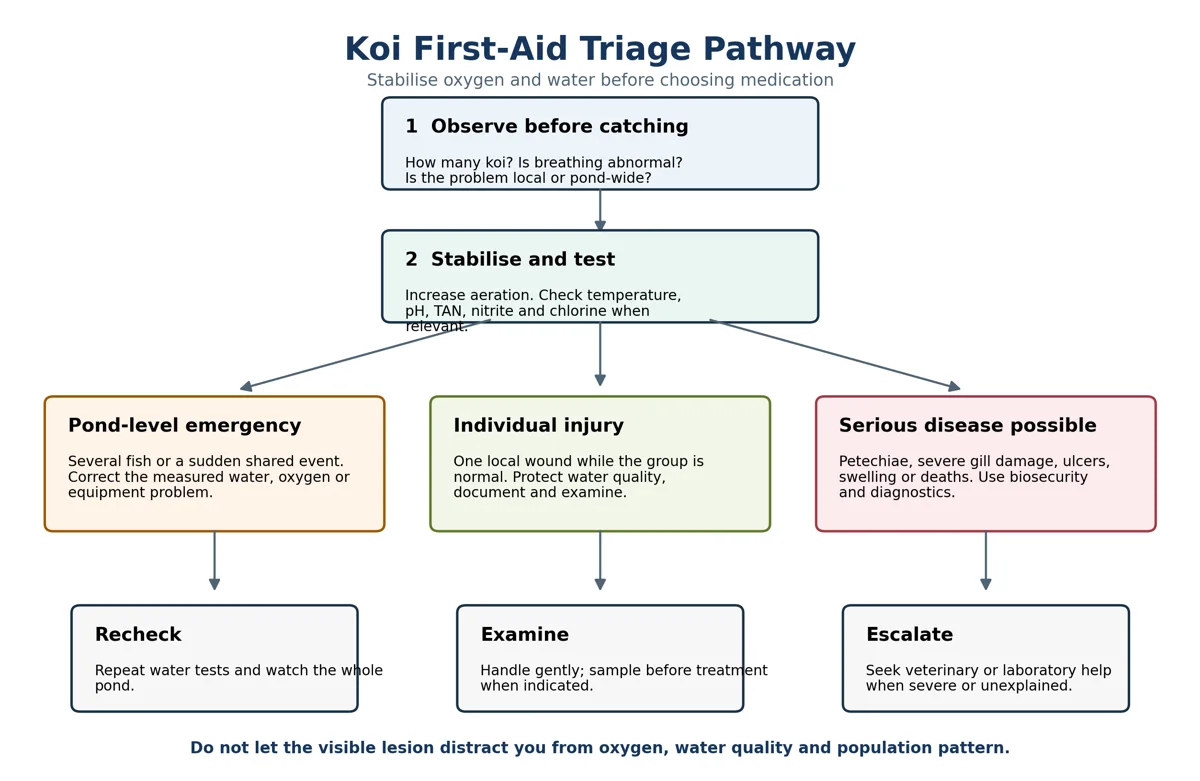
Figure 1. A practical koi first-aid triage pathway. The pathway starts with oxygen, water and population pattern before medication.
3. What to do in the first 10 minutes
- Watch before catching. Count affected fish and compare breathing, posture, location in the pond, schooling behaviour and responsiveness. Note whether the problem is local, pond-wide or spreading.
- Increase reliable aeration if breathing is fast, stocking is heavy, water is warm, a treatment was recently used, the pump failed or the cause is unclear. Confirm that air and water are actually moving, not merely that equipment is switched on.
- Check for an obvious system failure: power loss, blocked screen, empty pump chamber, closed valve, failed air pump, bypassed carbon, broken dechlorinator dosing, dead fish in filtration, chemical spill or sudden temperature change.
- Stop feeding temporarily during an acute pond-wide event. This lowers short-term oxygen demand, waste production and biofilter load while the cause is investigated.
- Test the water. At minimum measure temperature, pH, ammonia/TAN and nitrite. Measure dissolved oxygen if available. Test free and total chlorine after a water change or municipal-water exposure; add KH/alkalinity when pH instability is possible.
- Reconstruct the timeline. Ask what changed in the previous 24-72 hours: new koi, shipping, spawning, heavy rain, filter cleaning, feed increase, treatment, top-up, maintenance, pest control, construction runoff or a dead animal.
- Take clear photographs before repeated handling changes the appearance. Include one whole-fish image, close lesion images and a size reference. Record time and water results.
- Decide whether the fish truly needs to be moved. A mature, aerated, stable quarantine system can help; an uncycled tub can create ammonia and oxygen problems within hours.
- Collect diagnostic samples before treatment when parasites or infectious disease are plausible and the fish is stable enough. Fresh skin/gill material is more informative than a sample after chemical treatment.
- Escalate early if multiple fish are collapsing, deaths are occurring, gills are severely damaged, a wound penetrates deeply, or the koi is valuable and deteriorating.
4. Water testing is part of first aid
Water problems are invisible until they are measured. Merck lists low dissolved oxygen, ammonia, nitrite, chlorine, temperature fluctuation, gas supersaturation, carbon dioxide and other environmental hazards as causes of acute or chronic illness in fish. [5] A koi with an obvious wound can still be suffering from a separate water-quality problem, and poor water can turn a small injury into a serious infection.
| Test / observation | Why check it now | Important interpretation point |
|---|---|---|
| Temperature | Controls metabolism, oxygen demand, ammonia toxicity and drug safety. | Use the actual pond/hospital water temperature, not the weather forecast. |
| Dissolved oxygen | Low oxygen can cause rapid breathing, surface piping, collapse and catastrophic mortality. | In ponds, DO often falls before sunrise. Merck notes concentrations below about 5 mg/L are dangerous, although tolerance varies. [6] |
| pH | Rapid shifts can injure gills and skin and change ammonia toxicity. | Compare with the pond’s normal range and interpret with KH and ammonia. |
| KH / alkalinity | Shows buffering reserve and risk of pH crash. | A single acceptable pH does not prove adequate buffering. |
| Ammonia / TAN | Detects waste overload or biofilter failure. | Toxic un-ionised ammonia rises as pH and temperature rise. |
| Nitrite | Can impair oxygen transport and often signals incomplete nitrification. | Symptoms can resemble hypoxia. |
| Free + total chlorine | Detects municipal disinfectant exposure. | Free chlorine alone can miss chloramine; target is no detectable residual in live-fish systems. [6] |
| Salinity | Shows existing salt before more is added. | Repeated dosing and evaporation can leave higher salinity than expected. |
| Equipment flow | A “normal” test result may be misleading if circulation is bypassing part of the pond. | Inspect pumps, filters, drains, valves, returns and air distribution physically. |
| If a water sample may be needed for laboratory work, collect it before a water change when this can be done without delaying life-saving correction. Diagnostic guidance recommends a separate water sample because transport water changes rapidly around the fish. [7] |
|---|
5. Oxygen and circulation: the safest universal support
Extra aeration is not a diagnosis, but it is often the safest first support. A koi with damaged gills, a parasite burden, bacterial disease or chemical irritation has less respiratory reserve. Warm water and high stocking further narrow that reserve. If a chemical treatment is later required, some products can add oxygen demand or further irritate gills, which makes strong aeration even more important.
Do not assume a waterfall alone guarantees adequate dissolved oxygen. A pump may be running while flow is reduced by a blocked screen or air lock. In a dealer vat, the water may be visibly turbulent but still have inadequate reserve before dawn. A dissolved-oxygen meter is especially useful in high-value or heavily stocked systems because it converts an impression into a measurement.
If multiple koi are gasping and the cause is uncertain, increase aeration while testing. Do not wait for every result before providing oxygen support. If oxygenation improves behaviour, that is useful evidence, but it does not prove low oxygen was the only problem.
6. When to stop feeding temporarily
During an acute pond-wide event, temporarily stopping feed is usually sensible until oxygen, ammonia, nitrite and circulation are understood. Feeding increases metabolic oxygen demand and ammonia production and adds load to the biofilter. This is especially relevant after pump failure, biofilter disruption, major medication, power loss or a sudden increase in stocking.
Do not turn temporary fasting into prolonged underfeeding without reason. Once the system is stable and the fish are recovering, nutrition supports healing. A koi that refuses food despite stable water may be showing a more serious disease process and should not simply be force-fed. Medicated feed is unreliable if the fish is not eating enough to receive a calculated dose.
7. Should you move the koi to a hospital tank?
Isolation can be valuable when it reduces spread, allows close observation, protects a wounded fish from harassment or enables treatment in an accurately measured volume. It can also be harmful if the “hospital tank” is small, uncycled, poorly aerated, exposed to temperature swings or filled with water that differs sharply from the main pond.
| Move the fish when... | Leave it in place or delay movement when... |
|---|---|
| A genuinely separate, mature, well-aerated system is ready. | The proposed tank is uncycled or cannot maintain oxygen and temperature. |
| Contagious disease is plausible and isolation reduces exposure. | Several koi are affected by a shared pond-level water problem that must be corrected first. |
| A wound needs controlled observation or targeted topical care. | Repeated catching would add more trauma than the current stable lesion. |
| The fish is being bullied, chased or repeatedly reopening the injury. | Water chemistry between systems differs substantially and acclimation cannot be done safely. |
| Treatment is safer at a smaller known volume. | The only reason for moving is to “see if it gets better” without a diagnostic plan. |
Dedicated nets, bowls, hoses and test equipment should be used whenever infectious disease is a possibility. Do not move suspect treatment water or wet equipment back into a clean system.
8. Prepare before you catch the fish
Improvised examinations are where many koi acquire a second injury. Prepare the bowl, lid, aeration, pan net, koi sock, wet gloves, camera, ruler, microscope supplies and any planned wound-care materials before the fish is netted. Match examination water to the pond. Keep the bowl shaded and well oxygenated.
Merck recommends nitrile examination gloves when handling fish to reduce epithelial damage and advises only gentle pressure; stronger restraint often makes fish more fractious. Unsedated fish should be restrained only briefly for non-lethal sampling and returned to water immediately. [1]
9. How to handle an injured koi without making it worse
- Use a soft pan net to guide rather than chase. Avoid lifting a heavy koi in a standard net where the body weight is concentrated in the mesh.
- Transfer with a wet koi sock or other appropriate support and keep the fish’s body fully supported.
- Wet hands or gloves before contact. Do not rub the skin dry or wipe away the mucus layer.
- Keep out-of-water time as short as possible. Have every tool ready before restraint begins.
- Support the body evenly. Large koi can injure themselves during violent flexion if held too tightly or allowed to fall.
- Do not repeatedly lift the operculum or manipulate the gills unless a purposeful examination is being performed by someone competent.
- After a brief procedure, return the fish to oxygenated water and observe recovery before deciding on another intervention.
10. Sedation and anaesthesia: useful tools, not casual first aid
Sedation may be appropriate for large koi when safe restraint is otherwise impossible, but anaesthetic use introduces its own respiratory and dosing risks. Merck identifies tricaine methanesulfonate (MS-222) as the most common fish anaesthetic and stresses that it must be adequately buffered; unbuffered MS-222 is acidic and can damage epithelium. [1] Anaesthesia, injections, debridement, deep wound exploration and invasive procedures should be performed by people who understand fish physiology, accurate dosing, oxygenation and recovery.
Do not improvise with an unknown concentration of clove oil, human sedatives or a recipe copied from another pond. Product formulations, legal status and fish response vary. For a severely compromised koi, the safest decision may be to stabilise oxygen and water and seek veterinary assistance rather than add an anaesthetic burden.
11. Common external injuries and the immediate response
Scale loss and superficial abrasion
A freshly missing scale or superficial scrape after netting, spawning or collision may heal well if the environment is excellent and the source of trauma is removed. Photograph the area, check for sharp pond furniture or rough surfaces and minimise further handling. Redness at the edge can represent inflammation; progression, swelling, tissue loss or discharge increases concern for secondary infection.
Torn or split fins
Clean tears can heal, while crushed tissue, progressive erosion or fin-base redness deserves closer investigation. Do not trim a fin simply because the edge looks uneven. Determine whether the damage came from spawning, netting, predators, sharp equipment, fin rot or another disease process. Stable water and prevention of repeated trauma are the first steps.
Puncture or predator wound
Punctures from birds, mammals or pond equipment may look small at the surface while extending deeper into muscle. Inspect the entire fish for paired marks, swelling or hidden wounds. Deep, contaminated or penetrating injuries merit professional evaluation because surface cleaning alone may not address internal tissue damage or infection risk.
Open ulcer or exposed tissue
An ulcer is not just a cosmetic defect. It represents loss of the protective skin barrier and may follow trauma, parasites, water-quality injury or bacterial disease. Do not scrub aggressively. Merck’s surgical guidance notes that minimal cleaning with sterile saline may be sufficient for clean fish and that normal mucus has important antibacterial properties; very dilute disinfectants may sometimes be used professionally, but unnecessary disinfection can remove protective tissue. [1]
A shallow stable lesion on a bright fish is different from a deep crater, spreading haemorrhage, necrotic tissue, foul material, multiple lesions or systemic signs. The latter group may require culture, susceptibility testing, debridement or systemic therapy by an aquatic veterinarian. Bacterial disease should be diagnosed from appropriate tissue rather than assumed from the colour of the wound. [8]
Eye injury
Eye trauma can follow collision, netting, predator attack or severe infection. Keep water exceptionally clean, prevent further contact with rough surfaces and document whether the eye is cloudy, bleeding, protruding, collapsed or physically lacerated. Do not puncture a swollen eye or apply human eye drops without fish-health guidance. Bilateral pop-eye or several affected fish should prompt investigation for systemic or environmental causes rather than being treated as a simple local injury.
Mouth, operculum and gill injury
Injuries around the mouth or gill cover can impair feeding or respiration. Active gill bleeding, pale or necrotic gill tissue, persistent one-sided opercular movement or severe respiratory distress should be treated as urgent. Repeatedly opening the gill cover can worsen stress and create bleeding. Stabilise oxygen, minimise restraint and arrange competent examination.
Prolapsed or exposed internal tissue
A protruding vent, exposed tissue, deep body-wall penetration or suspected organ exposure is not routine hobby wound care. Keep the fish in clean, well-oxygenated water, prevent further trauma and obtain veterinary help. Do not attempt to push tissue back inside or cut it away without a diagnosis and anaesthesia plan.
12. If a koi has jumped out of the pond
A koi found on the floor may have dehydration of the skin and gills, scale loss, bruising, spinal or internal trauma and contamination from dust or chemicals. If there is still gill movement or other sign of life, transfer the fish gently into clean, strongly oxygenated water that matches the pond temperature and chemistry as closely as practical. Support it upright while it regains balance, without squeezing the body or forcing the fish backward through the water.
Do not scrub dirt from the skin or pour household antiseptics over the fish. If visible debris must be removed, gentle rinsing with clean system water or sterile saline is less destructive than wiping. Once the fish is breathing on its own, reduce handling and watch for delayed problems such as worsening balance, haemorrhage, scale loss, respiratory distress or secondary infection. A fish that appears to recover immediately can still deteriorate over the next 24-72 hours.
13. Water-change, chemical and toxin emergencies
When several koi become distressed shortly after a refill, chemical treatment, filter clean or maintenance event, assume a shared environmental exposure until evidence suggests otherwise. Increase aeration, stop adding products, test free and total chlorine where municipal water is involved, compare temperature and pH, and verify the dechlorination or carbon system. Do not try to “neutralise” one unknown chemical with a second product unless the interaction is specifically understood.
Chlorine and chloramine can injure skin and gills rapidly. Ammonia and nitrite can also create respiratory signs while the water still looks perfectly clear. If a pesticide, cleaning agent or construction chemical may have entered the pond, stop the source and seek specialist advice; activated carbon, water replacement or other responses depend on the contaminant and system design. Protecting oxygen and preventing continued exposure are the first priorities.
14. Respiratory distress and gill crisis
Fast breathing, wide opercular movement, hanging under a waterfall, surface piping, repeated yawning or collapse can result from low oxygen, ammonia, nitrite, chlorine, parasites, gill infection, viral disease, chemical burns or severe systemic illness. Breathing pattern is therefore a severity sign, not a parasite diagnosis.
Increase dependable aeration and test water immediately. When skin scrapes do not explain the problem or gill disease is strongly suspected, a fresh gill wet mount may be required, but gill sampling is more invasive and should be performed carefully. Severe gill necrosis, multiple affected koi or deaths justify urgent laboratory or veterinary support.
15. Rolling, floating, sinking and “swim bladder” assumptions
Abnormal buoyancy is a clinical sign, not a diagnosis of swim-bladder disease. A koi may roll or sink because of hypoxia, severe weakness, neurologic disease, trauma, internal swelling, gas supersaturation, toxin exposure, advanced infection or true gas-bladder pathology. Before manipulating the fish or adding weights, first assess oxygen, water quality, trauma history and the rest of the population.
A fish that cannot remain upright is at risk of additional abrasion and exhaustion. A smooth, well-aerated, appropriately sized hospital system may make observation safer, but do not confine a large koi in very shallow or poor-quality water merely to hold it upright. Persistent loss of equilibrium warrants professional assessment.
16. Severe swelling, pineconing or pop-eye
Dropsy-like swelling and raised scales indicate serious fluid-balance disturbance and are not a disease name by themselves. Causes can include systemic infection, organ dysfunction, severe osmoregulatory failure or other internal disease. First aid is supportive: excellent oxygen and water, minimal handling, biosecurity if other fish are affected, and prompt investigation. Salt or antibiotics should not be automatic responses because neither identifies the underlying cause.
17. Flashing, mucus and suspected parasites
Flashing, clamped fins, excess mucus and rapid breathing often trigger immediate parasite treatment, but ammonia, chlorine and other irritants can produce the same signs. Check water first, then obtain fresh skin or gill samples when parasites are plausible. Merck emphasises wet-mount examination for diagnosis of most external parasites. [1,9]
Treat the organism found rather than rotating through “general” products. A negative scrape does not completely exclude parasites if the wrong site was sampled, the burden is mainly in the gills or treatment was already given. Repeat representative sampling when the clinical picture and the slide do not agree.
18. When first aid becomes biosecurity
If several koi deteriorate after a new introduction, especially with severe gill disease, unusual mucus, lethargy or deaths, stop sales, transfers and mixing of equipment until the cause is clearer. Koi herpesvirus disease and other serious infections cannot be diagnosed by one external sign. WOAH lists KHV infection as a disease of koi/common carp and provides standards for diagnosis and movement risk; horizontal transmission through infected fish and contaminated water is central to outbreak control. [10]
- Separate nets, bowls, hoses and socks between suspect and clean systems.
- Do not move water from the affected system into another pond.
- Keep a written timeline of arrivals, sources, temperatures, clinical signs and mortality.
- Preserve fresh diagnostic opportunities before repeated chemical treatments obscure the picture.
- If the outbreak has trade, regulatory or farm implications, contact the relevant fish-health authority or diagnostic service early.
19. Preserve diagnostic evidence before treatment
A good first-aid response creates a better diagnosis. Record the fish’s behaviour before catching, take photographs, document all water values, note exact product names and doses already used, and collect fresh microscopy samples before antiparasitic treatment when possible. For bacterial disease, a surface swab of an old exposed ulcer can grow environmental organisms and may be less useful than an appropriately collected fresh tissue sample. [8]
UF/IFAS diagnostic guidance emphasises that live moribund fish are the most useful specimens, that freshly dead fish should be kept cool rather than allowed to decompose, and that freezing damages tissues needed for histology. Laboratories should be contacted before submission because required tissues, containers and transport conditions differ by test. [7]
20. Antibiotics: first aid is not blind antimicrobial use
Antibiotics do not correct hypoxia, ammonia, chlorine, parasites, viruses or trauma. Merck describes bacterial fish disease as commonly associated with predisposing conditions such as poor water quality, organic loading, handling, transport and hypoxia, and recommends culture and susceptibility testing when possible. [8]
For a superficial wound, environmental correction and local care may be enough. For systemic bacterial disease, injections or medicated feed may be appropriate under veterinary direction. A koi that has stopped eating cannot receive a dependable dose through food. Bath antibiotics may expose the entire pond and biofilter while achieving an uncertain internal dose. Human tablets, leftover injections and livestock powders should not be adapted by guesswork.
21. Salt is supportive in selected situations, not a universal emergency medicine
Salt can have legitimate supportive uses in freshwater fish, including selected osmoregulatory situations and nitrite management, but it does not cure every wound, bacterial infection, parasite or toxin exposure. Existing salinity, system volume, plants/invertebrates and medication compatibility all matter. If salt is used, measure concentration rather than relying on repeated unrecorded additions.
The safest first-aid question is not “How much salt should I add?” but “What problem am I trying to solve, and is salinity an evidence-based part of that plan?”
22. Building a safer hospital environment
A hospital tank should be simpler than the main pond but not biologically primitive. It needs stable temperature, strong aeration, mature biological filtration or a realistic ammonia-control plan, a smooth interior, secure cover, accurate volume and dedicated equipment. Shade reduces visual stress and prevents overheating. The fish must have enough room to turn without rubbing the walls.
Monitor ammonia and nitrite frequently, especially after reduced feeding, medication or biofilter disruption. If the hospital tank is newly established, the keeper must be prepared for frequent testing and conditioned water replacement. A “quarantine” label does not make a tank safe.
23. The koi first-aid kit
The highest-value first-aid items are tools that protect oxygen, measure water, reduce handling injury and preserve evidence. Medication should be a smaller, diagnosis-driven part of the kit.
| Category | Recommended items | Why they matter |
|---|---|---|
| Aeration / backup | Battery air pump, spare airline and stones, spare air pump or pump where practical, backup power plan. | Oxygen failure is time-critical and can affect the entire pond. |
| Water tests | Thermometer, pH, KH/alkalinity, ammonia/TAN, nitrite, free/total chlorine; salinity meter if salt is used; DO meter for high-value systems. | Turns guesswork into measurable decisions. |
| Handling | Soft pan net, koi sock, large smooth bowl, cover, wet nitrile gloves. | Reduces trauma and mucus loss during examination. |
| Documentation | Phone/camera, ruler or scale reference, waterproof notebook, labels, marker, treatment log. | Allows progression and interventions to be compared accurately. |
| Sampling | Microscope, slides, coverslips, smooth sampling tool, labelled containers - only if the keeper is competent. | Supports diagnosis before medication. |
| Isolation | Mature aerated hospital system, dedicated net/hoses, known water volume, appropriate dechlorinator. | Enables observation and targeted treatment without exposing the collection. |
| Wound support | Sterile saline, clean swabs and veterinarian-recommended topical supplies. | Supports gentle cleaning when indicated without improvising household products. |
| Contacts | Aquatic veterinarian, experienced fish-health professional, diagnostic service, supplier/farm records, relevant authority contacts. | Emergency contact is most useful when arranged before the emergency. |
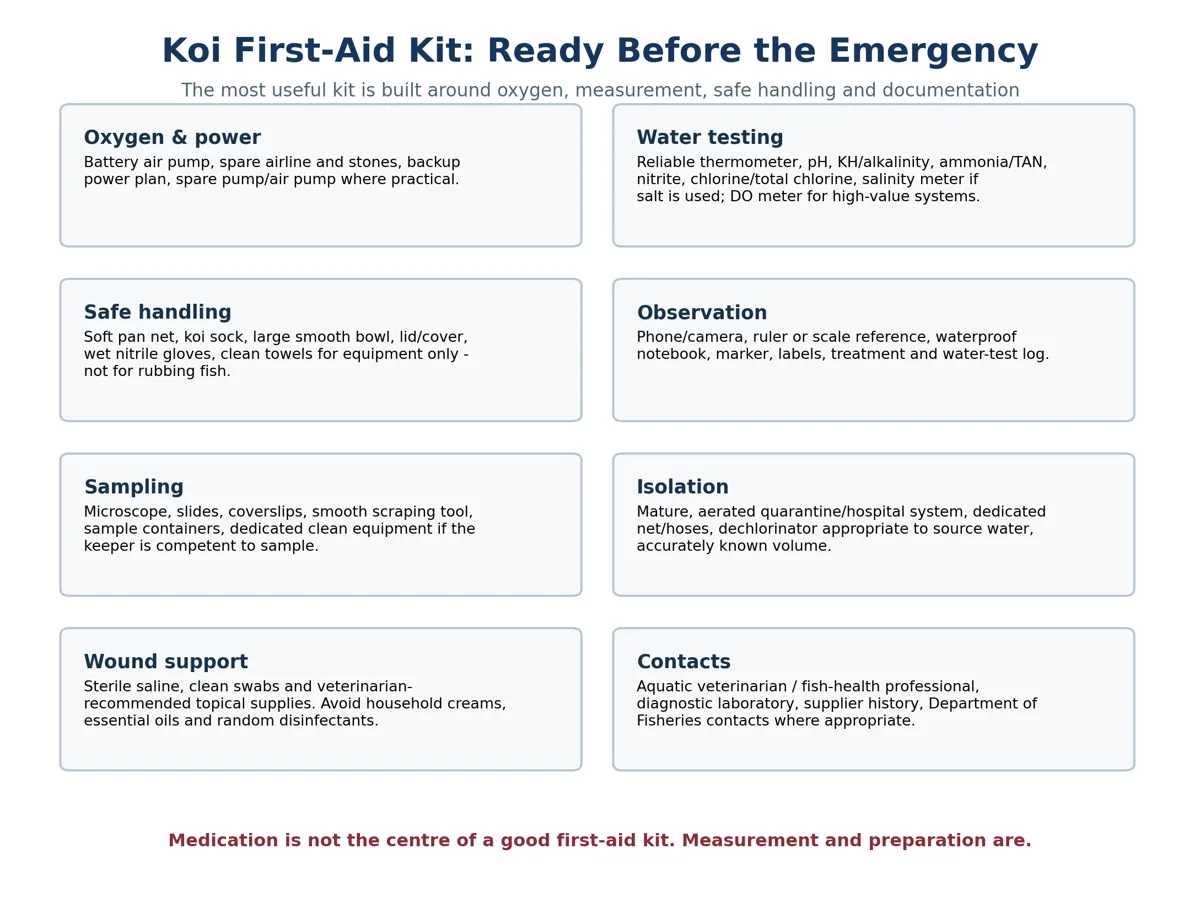
Figure 2. A first-aid kit centred on oxygen, measurement, safe handling and documentation rather than blind medication.
24. Common first-aid mistakes
| Mistake | Why it causes problems |
|---|---|
| Catching the fish repeatedly | Repeated chasing and restraint can worsen stress, strip mucus and change the very redness or breathing you are trying to assess. |
| Treating colour instead of cause | Redness, mucus or clamped fins are signs. They do not identify bacteria, parasites or toxins by themselves. |
| Moving a sick fish into an uncycled tub | Small temporary tanks can develop ammonia and oxygen problems very quickly. |
| Using household wound products | Human antiseptics, pain creams, essential oils, zinc products and unlabelled disinfectants may be toxic to gills or aquatic life. |
| Mixing chemicals | Unknown interactions can increase toxicity, consume oxygen or make it impossible to know what helped. |
| Using antibiotics “just in case” | Unnecessary antimicrobials can select resistant bacteria, damage biofilters and delay diagnosis. |
| Assuming a clear pond is safe | Ammonia, nitrite, chlorine, low oxygen and pH instability can occur in visually clear water. |
| Discarding a fresh dead fish | A recently dead fish can still provide diagnostic value if handled correctly; decomposition rapidly destroys useful evidence. |
| Freezing every specimen | Freezing can damage tissues needed for histology; contact the receiving laboratory first. |
| Forgetting biosecurity | A first-aid bowl, net or hose can spread a problem to another system if equipment is shared wet. |
25. Malaysia and warm-climate considerations
Malaysian koi ponds commonly operate at warm temperatures with high stocking and year-round feeding. Warm water holds less oxygen than cooler water while fish metabolism and microbial activity can remain high. This makes oxygen reserve particularly important during illness, heavy rain, overnight periods, filter failure and chemical treatment.
Dealer and auction systems add another layer of risk: repeated imports, consolidated shipments, frequent netting and rapid stock turnover can combine transport stress with new pathogen exposure. The first-aid response should therefore include source history and group separation. New or suspect fish should not share nets, bowls, wet hands or water with established stock until the situation is understood.
The Department of Fisheries Malaysia maintains fish-health and biosecurity services. Its public guidance states that unexplained fish deaths can be reported to State Biosecurity Units, State Fisheries Offices or the Fisheries Biosecurity Division for investigation, and its published laboratory list includes the Selangor Fisheries Biosecurity Centre at KLIA, which analyses ornamental fish including koi for fish-disease parameters such as KHV. Submission pathways can depend on the relevant surveillance or control programme, so contact the authority before collecting or sending samples. [11,12]
26. When to contact an aquatic veterinarian or diagnostic laboratory
- Several fish are deteriorating or dying and the cause is not obvious.
- The koi has severe respiratory distress, extensive gill damage or cannot remain upright.
- A wound is deep, penetrating, rapidly expanding, necrotic or associated with major haemorrhage.
- There are petechiae, marked swelling, pop-eye, multiple ulcers or systemic signs.
- A valuable koi is worsening despite stable water and basic supportive care.
- Treatment has failed or disease repeatedly returns.
- You suspect KHV, CEV or another serious contagious disease that affects movement decisions.
- Culture, susceptibility testing, PCR, histology, imaging, surgery, anaesthesia or injectable medication may be required.
| Early diagnostic support is often cheaper than losing several valuable koi after repeated blind treatments. |
|---|
27. How to preserve a useful sample
Contact the receiving laboratory first. Sample requirements depend on whether the lab needs live examination, bacterial culture, PCR, histology or toxicology. UF/IFAS recommends representative live moribund fish when possible. If a fish has just died, keep it cool and moist in a sturdy bag and transport on ice packs without allowing the specimen to freeze when histology is needed. [7]
Collect a separate water sample from the affected system, ideally as soon as abnormal behaviour begins and before a water change if this does not delay emergency correction. Label the time, system, location and current treatments. The water in a transport bag is not a substitute because fish respiration and waste excretion change pH and ammonia during transport. [7]
Do not keep a decomposing koi “for the lab” at pond temperature. Fish tissues autolyse quickly and environmental bacteria overgrow tissues, reducing diagnostic value. Freshness and case history are part of the sample.
28. The first 24-72 hours after stabilisation
Improvement after first aid should be documented, not assumed. Record water values, breathing, posture, appetite, lesion size and whether other fish are developing signs. Use the same lighting and viewing angle for photographs. Re-test the parameter that was abnormal; ammonia can rebound if the biofilter remains damaged, and oxygen can fall again overnight.
| Recovery sign | What it suggests | What would make you escalate |
|---|---|---|
| Breathing slows toward the group baseline | Respiratory stress is easing. | Continued surface piping, unilateral gill movement, collapse or worsening gill appearance. |
| Fish remains upright and rejoins the group | General stability is improving. | Isolation, loss of balance, head-down posture or sudden bursts of abnormal swimming. |
| Appetite returns | Systemic stress may be decreasing. | Persistent anorexia, spitting food or inability to feed due to mouth injury. |
| Wound margin remains stable or contracts | Healing may be progressing. | Expansion, swelling, deeper tissue loss, discharge or new haemorrhage. |
| No new fish become affected | A local problem becomes more plausible. | New cases, especially across multiple systems or after a new introduction. |
| Water values remain stable after correction | The environmental fix is holding. | Rebound ammonia/nitrite, pH instability or recurring low oxygen. |
29. Practical first-aid scenarios
Scenario 1: one missing scale after netting
One koi has a fresh missing scale and mild local redness after being moved. It is bright, swimming normally and the rest of the pond is unaffected. Water tests are normal. The sensible first aid is stable, oxygen-rich water, no further netting, documentation and removal of any handling problem. Antibiotics are not automatically justified. Escalate if the area swells, expands, loses tissue or appetite falls.
Scenario 2: several koi gasp after a large top-up
Within an hour of a large refill, several koi become restless and breathe rapidly. This is a pond-level environmental emergency until proven otherwise. Increase aeration, test free and total chlorine, compare temperature and pH, verify dechlorinator delivery and inspect the water-treatment path. Catching the reddest koi for wound treatment would miss the shared exposure.
Scenario 3: a koi jumps out overnight
The fish is found on a damp floor with slow gill movement and several abrasions. Transfer it gently to matching, strongly aerated clean water and support it upright while it regains balance. Do not scrub the skin. Once ventilation improves, minimise handling and observe for delayed trauma, respiratory deterioration and secondary infection.
Scenario 4: deep puncture after a predator strike
A koi has two small punctures on the flank but is otherwise responsive. Because punctures can extend deeper than they appear, photograph them, protect water quality, prevent further predator access and arrange experienced examination rather than assuming the surface holes are minor. Progression, swelling, haemorrhage or lethargy would raise urgency.
Scenario 5: flashing after a new shipment
Several imported koi begin flashing and clamping. Ammonia and nitrite are acceptable. Rather than adding a broad parasite treatment immediately, stabilise water, review transport and chlorine exposure and take fresh skin/gill samples. Treat the organism found. Keep quarantine equipment separate from the main collection.
Scenario 6: ulcer plus a second fish stops eating
One koi has a deep ulcer and petechiae; another fish in the same pond becomes anorexic. This is no longer a simple local wound. Stabilise oxygen and water, stop transfers, use biosecurity and seek diagnostics. Culture, susceptibility testing, microscopy and possibly PCR may be needed depending on the full clinical pattern.
30. Daily recovery checklist
- Is breathing calmer than yesterday and similar to unaffected koi?
- Is the fish upright and swimming voluntarily?
- Is appetite returning, stable or declining?
- Is the lesion smaller, unchanged or expanding under the same lighting?
- Are there new petechiae, swelling, raised scales, fin-base redness or ulcers?
- Are fins open or clamped? Is the fish flashing, jumping or isolating?
- Are the eyes, mouth, gill covers, abdomen and vent changing?
- Have any other koi developed similar signs?
- What are today’s temperature, dissolved oxygen, pH, KH, ammonia, nitrite, chlorine and salinity results where relevant?
- What intervention was made, when was it made, and what changed afterward?
31. Frequently asked questions
Should I add salt immediately when a koi is injured?
No. Salt has specific supportive uses, but it is not a universal first-aid treatment. Measure the current salinity, know the true volume and decide what problem you are trying to solve.
Should I put antibiotics on every cut?
No. Many superficial injuries heal with excellent water and prevention of further trauma. Progressive ulcers or systemic disease may need culture-guided antimicrobial treatment.
Can I use iodine or chlorhexidine on a wound?
Very dilute disinfectants may be used in professional fish wound care, but Merck notes that minimal cleaning with sterile saline may be sufficient and that unnecessary disinfection can damage protective mucus. Use a fish-specific plan rather than household-strength products. [1]
Should I move every sick koi to quarantine?
Only if the quarantine/hospital system is actually safer and the movement helps biosecurity, observation or treatment. An uncycled tub can be more dangerous than the main pond.
Can I diagnose parasites from flashing?
No. Flashing is compatible with parasites but also with ammonia, chlorine and other irritants. Fresh microscopy is much stronger evidence.
What if the koi is bleeding?
Reduce handling, protect oxygen and water quality and assess the cause. Major or persistent haemorrhage, deep wounds or associated collapse require urgent professional care.
What if the fish is not eating?
Check water, temperature, breathing and systemic signs. Do not rely on medicated feed if the fish is not consuming enough to receive the intended dose.
How soon should a superficial injury look better?
There is no universal time. The important trend is stability: less inflammation, no expansion, normal breathing and behaviour, and no new tissue loss. Worsening over hours or days is more important than a fixed healing deadline.
Can a koi recover after jumping out of the pond?
Sometimes, especially if it is found quickly and still has gill movement. Immediate gentle return to clean, oxygen-rich water is appropriate, but delayed trauma and secondary infection remain possible.
When is a dead koi still useful for diagnosis?
The sooner the better. Freshly dead, chilled specimens can retain diagnostic value; decomposed fish are much less useful. Do not freeze a specimen needed for histology unless the receiving laboratory specifically instructs you to do so. [7]
Koi first-aid emergency card
| OBSERVE -> OXYGENATE -> TEST -> DOCUMENT -> ISOLATE ONLY IF SAFER -> SAMPLE BEFORE TREATMENT -> TARGET THE CAUSE -> RECHECK |
|---|
| If you see... | Do this first | Do not do this first |
|---|---|---|
| Several fish gasping / sudden pond-wide distress | Increase aeration, test water, inspect pumps and recent water/treatment events. | Do not catch one fish and start antibiotics. |
| One superficial injury | Protect water quality, remove the injury source, photograph and monitor. | Do not repeatedly net or scrub the lesion. |
| Deep wound / severe bleeding / exposed tissue | Stabilise in excellent water and seek experienced care. | Do not cut, cauterise or use household creams. |
| Flashing / mucus / clamping | Test water, then obtain fresh skin/gill samples when indicated. | Do not rotate blindly through parasite treatments. |
| Rapid deaths after new fish | Stop transfers, separate equipment, preserve samples, seek diagnostics. | Do not move suspect fish or water through the collection. |
| Freshly dead valuable koi | Contact the lab, chill correctly, collect separate water/history. | Do not leave warm to decompose or automatically freeze. |
Conclusion
The most effective koi first aid is disciplined rather than dramatic. A sick fish needs oxygen, stable water, gentle handling and a clear decision pathway before it needs a bottle of medicine. The keeper who first asks “How many fish are affected? What changed? What do the water tests show? What evidence can I preserve?” is much more likely to identify the real problem than the keeper who treats the most frightening visible sign.
For a local injury, excellent water and prevention of further trauma may be enough. For a pond-wide emergency, correcting the environment can save the entire population. For progressive wounds, severe gill disease, systemic signs or unexplained deaths, early microscopy, culture, PCR, histology or veterinary examination can prevent costly delays. The goal of first aid is not to complete the diagnosis in ten minutes. It is to keep the koi alive, prevent additional harm and make the next decision better.
References and further reading
This article is an original educational synthesis for koi keepers and dealers. It prioritises environmental stabilisation, diagnosis, biosecurity and qualified fish-health support over blind medication. Treatment labels, permitted uses, laboratory submission procedures and disease-reporting requirements can change. Sources were reviewed in September 2026.
1. Merck Veterinary Manual. Management of Aquarium Fish. Full review May 2022; updated June 2026. https://www.merckvetmanual.com/exotic-and-laboratory-animals/aquarium-fish/management-of-aquarium-fish
2. Merck Veterinary Manual. Emergencies of Fish. Updated September 2024. https://www.merckvetmanual.com/all-other-pets/fish/emergencies-of-fish
3. Merck Veterinary Manual. Routine Health Care of Fish. Updated April 2026. https://www.merckvetmanual.com/all-other-pets/fish/routine-health-care-of-fish
4. Francis-Floyd R. Stress—Its Role in Fish Disease. University of Florida IFAS Extension, FA005. https://ask.ifas.ufl.edu/publication/FA005
5. Merck Veterinary Manual. Common Environmental Hazards for Fish. https://www.merckvetmanual.com/multimedia/table/common-environmental-hazards-for-fish
6. Merck Veterinary Manual. Environmental Diseases of Aquatic Animals in Aquatic Systems. https://www.merckvetmanual.com/exotic-and-laboratory-animals/aquatic-systems/environmental-diseases-of-aquatic-animals-in-aquatic-systems
7. Stilwell NK, Yanong RPE, Francis-Floyd R. Submission of Fish for Diagnostic Evaluation. University of Florida IFAS Extension, FA055. https://ask.ifas.ufl.edu/publication/FA055
8. Petty BD, Francis-Floyd R, Yanong RPE. Bacterial Diseases of Fish. Merck Veterinary Manual. Updated September 2024. https://www.merckvetmanual.com/exotic-and-laboratory-animals/aquarium-fish/bacterial-diseases-of-fish
9. Petty BD, Francis-Floyd R, Yanong RPE. Parasitic Diseases of Fish. Merck Veterinary Manual. Updated June 2026. https://www.merckvetmanual.com/exotic-and-laboratory-animals/aquarium-fish/parasitic-diseases-of-fish
10. World Organisation for Animal Health (WOAH). Koi herpesvirus disease; Aquatic Code and Aquatic Manual resources. https://www.woah.org/en/disease/koi-herpesvirus-disease/
11. Department of Fisheries Malaysia. Fisheries Biosecurities FAQ. https://www.dof.gov.my/en/frequently-asked-questions/fisheries-biosecurities-faq/
12. Department of Fisheries Malaysia. List of Fisheries Biosecurity Laboratories. https://www.dof.gov.my/en/services/certification-scheme/list-of-fisheries-biosecurity-laboratories/
13. Yanong RPE. Fish Health Management Considerations in Recirculating Aquaculture Systems—Part 3: General Recommendations and Problem-Solving Approaches. UF/IFAS, FA101. https://ask.ifas.ufl.edu/publication/FA101
14. Francis-Floyd R, Watson C, Petty D, Pouder DB. Ammonia in Aquatic Systems. UF/IFAS, FA031. https://ask.ifas.ufl.edu/publication/FA031
15. Crosby TC, Hill JE, Martinez CV, Watson CA, Pouder DB, Yanong RPE. On-Farm Transport of Ornamental Fish. UF/IFAS, FA119. https://ask.ifas.ufl.edu/publication/FA119
16. Crosby TC, Hill JE, Martinez CV, Watson CA, Pouder DB, Yanong RPE. Preparation of Ornamental Fish for Shipping. UF/IFAS, FA120. https://ask.ifas.ufl.edu/publication/FA120
17. Noga EJ. Fish Disease: Diagnosis and Treatment. 2nd ed. Wiley-Blackwell. 2010.
18. Roberts RJ, ed. Fish Pathology. 4th ed. Wiley-Blackwell. 2012.