
Trichodina in Koi: Identification, Symptoms and Treatment
Educational guide · References and further reading below. Seek qualified advice for fish-health decisions.
Quick summary: Trichodina is a group of mobile ciliated organisms that live on the skin, fins and gills of fish. A few organisms may cause little obvious disease, but heavy burdens can irritate tissue, increase mucus, impair gill function and leave koi vulnerable to secondary problems. The decisive diagnostic step is a fresh wet mount viewed under a microscope. Because the same outward signs occur with other parasites and with poor water quality, treating from symptoms alone is unreliable. Successful control also requires attention to organic waste, stocking density, oxygenation and sanitation—not merely a chemical treatment.
What this article covers
- What Trichodina is and why it becomes important in koi ponds
- How to recognise it under the microscope
- Clinical signs and why they are not specific
- How to perform a useful skin scrape and gill wet mount
- How to distinguish Trichodina from Costia, Chilodonella, white spot and flukes
- Treatment principles, safety limits and reasons treatment fails
- How pond hygiene, organic load and crowding influence recurrence
- A practical response plan for tropical and Malaysian koi systems
1. What is Trichodina?
Trichodina is the name commonly used by koi keepers for a group of closely related mobile ciliates known as trichodinids. The group includes several genera, and exact species identification normally requires specialist morphology or molecular work. For practical pond-side diagnosis, however, the important question is usually whether a clinically meaningful burden of trichodinids is present on the skin or gills.
Under a microscope, a trichodinid viewed from above is characteristically circular and often looks like a tiny rotating disc, wheel or flying saucer. Its underside contains a specialised attachment structure with a ring of denticles. Around the body are cilia that help it move. In a fresh wet mount, its rapid gliding or spinning movement is often as useful to a koi keeper as its outline.
Trichodinids are best thought of as opportunistic ectoparasites or ectocommensals whose clinical importance depends strongly on burden and host condition. Their presence does not automatically prove that every sign of disease is caused by them. A lightly infested koi in otherwise excellent condition may look normal, while a heavily infested or stressed koi may develop significant skin and gill irritation.
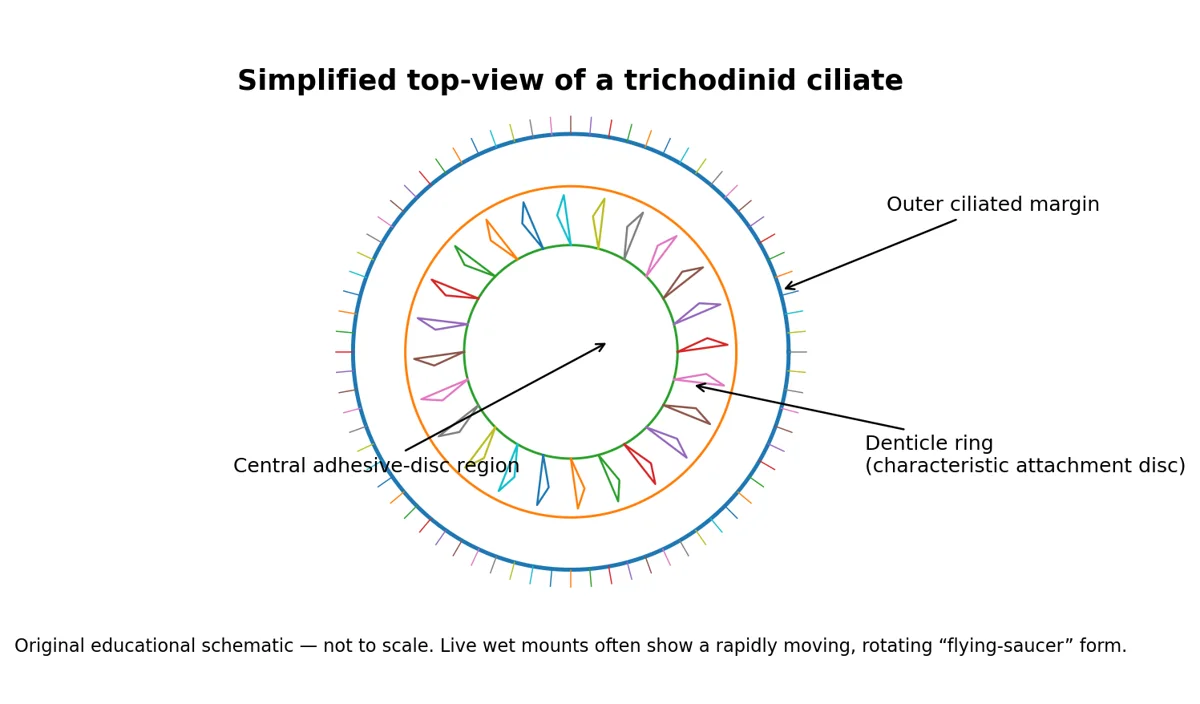
Figure 1. Original schematic of the characteristic trichodinid body plan seen from above.
2. Why Trichodina matters in a koi pond
The skin and gills are not passive surfaces. They form part of the koi’s protective barrier, osmoregulatory system and respiratory system. When large numbers of mobile ciliates continually attach to and move across these tissues, irritation and epithelial damage can increase mucus production and compromise normal function. Gill involvement is especially important because a koi may appear to be suffering from an 'oxygen problem' even when the pond has adequate aeration.
The effect is also indirect. Damaged skin and gill surfaces are less effective barriers against bacteria and other opportunistic organisms. A fish already weakened by transport, crowding, temperature change, poor nutrition, ammonia exposure or another parasite may therefore tolerate a Trichodina burden much less successfully than a stable, unstressed fish.
Veterinary references repeatedly associate trichodinid problems with high stocking density, poor sanitation and elevated organic loading. That does not mean every case comes from a visibly dirty pond. Organic debris can accumulate in settlement areas, pipework, dead zones, filter chambers, under media, or in sections of the system that are rarely inspected. A pond can look clear while still carrying a high biological and organic load.
3. The signs: what you may see before you use a microscope
The outward signs of Trichodina are important warning signals but are not diagnostic. The same signs can be caused by Costia (Ichthyobodo), Chilodonella, skin or gill flukes, white spot, chemical irritation, ammonia or nitrite exposure, low dissolved oxygen and several gill diseases.
| Possible observation | What it may mean | Why it is not enough to diagnose Trichodina |
|---|---|---|
| Flashing or rubbing | Skin or gill irritation | Occurs with many parasites and with chemical/water irritation |
| Excess mucus / grey cast | Protective mucus response | Common with several ectoparasites and poor water quality |
| Clamped fins | General stress or illness | Highly nonspecific |
| Rapid breathing | Gill irritation or oxygen limitation | Can result from parasites, low oxygen, ammonia, nitrite or gill injury |
| Piping / staying near returns | Respiratory distress | Requires urgent oxygen and water-quality assessment |
| Reduced appetite / loss of condition | Systemic effect of prolonged stress | Seen in many diseases |
| Lethargy | Advanced stress | Not parasite-specific |
4. The most important rule: check water before blaming parasites
When koi flash or breathe quickly, many keepers jump directly to parasite medication. That is risky because water-quality problems can imitate parasite disease and can also make medication substantially more dangerous. Before reaching for a treatment, check the system in a disciplined order.
- Dissolved oxygen, especially if fish are gathering at waterfalls, returns or the surface.
- Ammonia and nitrite, including any recent filter disruption, power failure, heavy feeding or large stock addition.
- pH together with KH/alkalinity and the recent pH trend rather than a single number in isolation.
- Water temperature, particularly after transport, major weather changes or heating/cooling events.
- Chlorine/chloramine risk after water changes and the adequacy of dechlorination.
- Recent chemical additions: treatments, algaecides, disinfectants, salt changes or accidental contamination.
- Visible organic accumulation in sumps, settlement chambers, pipe runs, under media and low-flow areas.
This 'water first' approach does not delay proper parasite treatment. It makes treatment safer and prevents an avoidable mistake: medicating fish whose primary problem is environmental.
5. Microscopic identification
A fresh wet mount is the practical diagnostic method of choice for most external fish parasites. For koi, skin mucus is usually the least invasive first sample, while a gill sample becomes particularly valuable when breathing is abnormal, fish are piping, or a skin scrape is unrevealing despite strong respiratory signs.
Trichodinids are readily visible at low-to-moderate magnification. In a live preparation they tend to glide rapidly over the slide and may rotate. Viewed face-on, the organism appears circular; from the side, it can look dome- or saucer-shaped. The internal denticle ring is a strong identifying feature. Exact species determination is a different task and may require stained preparations, measurements and specialist expertise.
6. How to take a useful skin scrape
A diagnostic scrape is not about removing a large amount of tissue. The aim is to collect a thin film of mucus from representative areas while minimising injury. Handling technique matters because rough restraint can create more damage than the sample itself.
1. Prepare the microscope, clean slide, coverslip, pond water and handling equipment before catching the koi.
2. Choose a fish showing the relevant signs. If several fish are affected, sampling more than one fish gives a more reliable picture of the population.
3. Restrain the koi securely and gently. Large or valuable koi may require experienced assistance or appropriate sedation under veterinary guidance.
4. Using a clean smooth-edged slide or suitable scraping instrument, collect mucus from the body surface in the direction from head toward tail, avoiding the eye, gill cover margin and damaged ulcers.
5. Place the mucus on a slide with a small drop of pond water and apply a coverslip without crushing the sample.
6. Examine immediately. Parasite movement is diagnostically useful and deteriorates as the sample dries or warms under the microscope light.
7. Scan systematically at low magnification first, then increase magnification to examine suspect organisms.
Do not use distilled water to make the wet mount; a sample that differs markedly in salinity or chemistry from the fish’s environment can distort or kill organisms and reduce diagnostic value.
7. When a gill wet mount is more informative
Gill sampling can identify parasites that are sparse on the skin but concentrated on respiratory tissue. It is particularly useful when koi have rapid opercular movement, cough-like gill motions, piping, hanging in high-flow areas or unexplained respiratory distress.
Gill tissue is delicate and highly vascular. Inexperienced sampling can injure the fish, so keepers who are not trained should seek help from an aquatic veterinarian or experienced koi-health professional. For high-value koi, the diagnostic benefit of a proper sample often far outweighs the risk of repeatedly treating blindly.
8. What 'heavy infestation' really means
There is no single hobbyist number that converts a microscope count into a universal treatment threshold for every koi and every system. Clinical significance depends on where the parasites are found, how many are seen across multiple fields, the condition of the fish, whether gills are involved, and whether the same finding is repeated in other symptomatic fish.
A practical interpretation is to combine three pieces of evidence: clinical signs, parasite burden, and environmental context. A few organisms on one scrape from a vigorous koi in a stable pond are not equivalent to repeated fields containing numerous trichodinids from several koi that are flashing and breathing hard.
9. Differential diagnosis: organisms commonly confused with Trichodina
| Problem | Typical wet-mount clue | Common overlap with Trichodina |
|---|---|---|
| Trichodina / trichodinids | Round disc; fast gliding/rotating movement; visible denticle ring | Flashing, mucus, respiratory signs |
| Costia (Ichthyobodo) | Very small, fast, flickering/jerky organisms; easiest to miss if sample quality is poor | Mucus, lethargy, clamping, severe skin/gill disease |
| Chilodonella | Larger flattened ciliate; gliding movement; characteristic shape when seen well | Mucus, flashing, respiratory stress |
| Skin flukes (Gyrodactylus) | Worm-like monogenean; hooks/attachment structures; often active | Flashing, skin irritation |
| Gill flukes (Dactylogyrus) | Monogenean usually associated with gills; hooks visible | Rapid breathing and gill irritation |
| Ich / white spot | Large ciliate; classically rounded with distinctive internal structures; visible spots may or may not dominate | Flashing, respiratory signs |
| Water-quality irritation | No causative parasite may be seen | Can reproduce nearly every external-parasite sign |
Mixed infections are possible. Finding Trichodina should not end the scan. Continue looking for flukes, Costia, Chilodonella and other organisms because treatment selection changes when more than one problem is present.
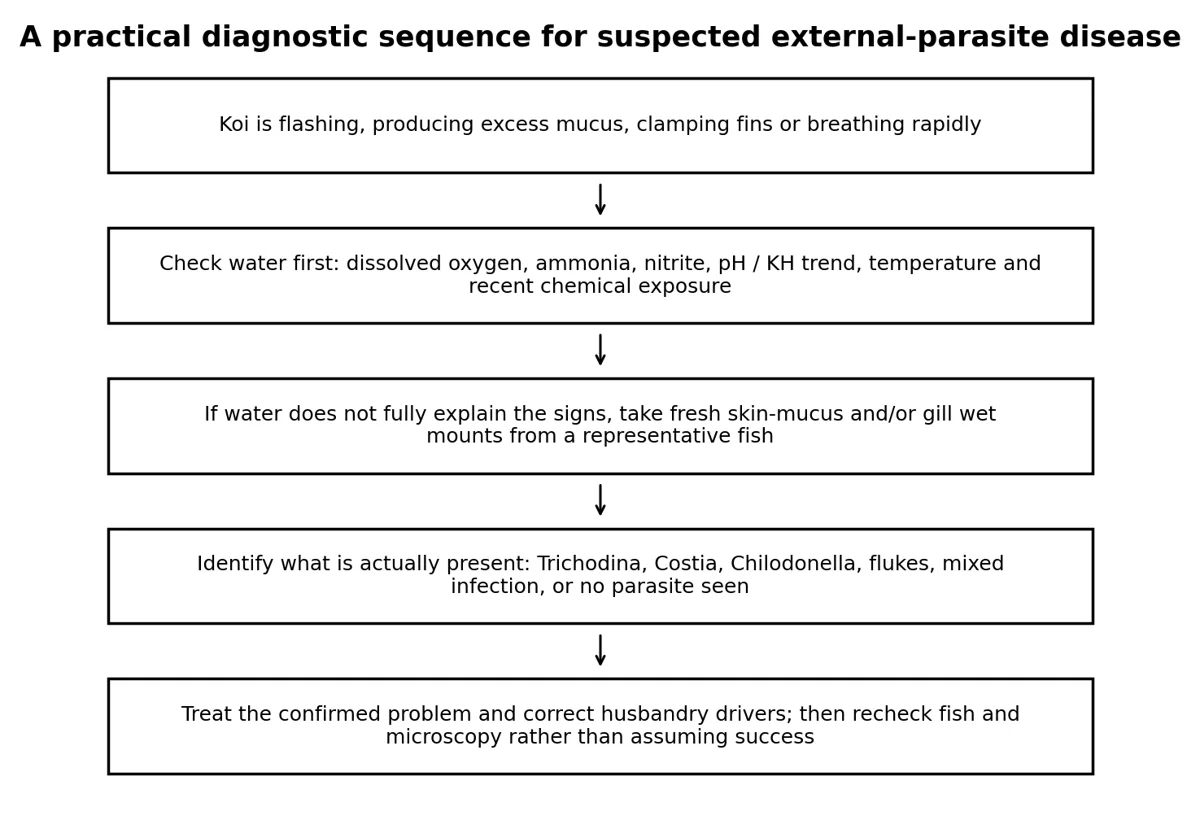
Figure 2. A water-first, microscopy-led diagnostic workflow.
10. Treatment: the principle is more important than the product name
Once a clinically meaningful Trichodina infestation is confirmed, the objective is twofold: reduce the parasite burden and remove the husbandry conditions that encouraged it. Veterinary references list formalin and copper sulfate among treatments used for freshwater trichodinids. In practice, the safest choice and dose depend on the exact product, water chemistry, system design, fish condition, local regulation and whether other species share the system.
This is why a treatment article should not reduce the process to a single universal 'X millilitres per tonne' formula. Formalin can depress dissolved oxygen and becomes more hazardous when fish are already oxygen-stressed or when water is warm. Copper toxicity is strongly influenced by water chemistry, especially alkalinity and hardness. Combining chemicals, assuming every commercial concentration is identical, or copying a dose from a different pond can turn a manageable parasite problem into an acute toxicity event.
Some koi-keeping protocols also use oxidising agents such as potassium permanganate against external protozoa. These approaches can be effective in appropriate systems but are highly dependent on organic load and operator experience. They should not be treated as interchangeable with formalin or copper, and they should never be stacked casually with other chemicals.
11. A safe treatment decision framework
1. Confirm the diagnosis with microscopy whenever possible.
2. Measure pond volume as accurately as possible. A dosing error starts with a volume error.
3. Check dissolved oxygen, ammonia, nitrite, pH, KH/alkalinity and temperature before treatment.
4. Increase aeration as appropriate and make sure pumps and critical circulation will remain operational.
5. Remove or bypass treatment-sensitive equipment only if the product instructions or veterinary plan requires it.
6. Use one coherent treatment protocol. Do not combine medications simply because symptoms look severe.
7. Follow the labelled concentration of the exact product or an aquatic veterinarian’s prescription; do not assume products with similar names have identical strength.
8. Observe koi continuously during the high-risk period after administration. Be prepared to stop exposure or perform water changes if fish show acute distress.
9. After the appropriate interval, reassess the koi and repeat microscopy to confirm whether the parasite burden has actually fallen.
10. Clean up the environmental drivers so the problem does not immediately return.
12. Why oxygen deserves special attention
Respiratory distress is one of the most concerning presentations of external parasite disease. Trichodina on the gills may already be compromising gas exchange before any chemical is added. At the same time, several parasite treatments increase oxygen demand or reduce the safety margin. In warm tropical water, oxygen solubility is naturally lower than in cool water, while koi metabolism and microbial oxygen consumption can remain high.
For Malaysian ponds, this makes robust aeration more than a general good practice. It is part of treatment safety. Systems with heavy fish loads, high feeding rates, shower filters, moving beds, enclosed chambers or large overnight oxygen swings should be assessed as complete oxygen systems rather than judged only by whether bubbles are visible.
13. Why cleaning the pond is part of treatment
Trichodina is repeatedly described in veterinary aquaculture references as a sign that sanitation or stocking conditions deserve attention. The organism often becomes abundant where organic matter is high. Uneaten food, faeces, trapped fines and bacterial-rich debris create a pond environment in which opportunistic external organisms can flourish.
The correct response is not to sterilise the biological filter. Instead, remove concentrated waste from places where it should never be allowed to accumulate: settlement chambers, bottom-drain sumps, prefilters, stagnant corners, pipework traps and packed mechanical media. A well-designed pond continuously exports waste before it decomposes; it does not merely hide the waste in a filter.
- Flush bottom drains and settlement zones routinely.
- Keep mechanical filtration operating efficiently so solids do not break down into dissolved and fine organic material.
- Avoid chronic overfeeding relative to filtration capacity.
- Prevent dead zones in tanks, quarantine systems and temporary holding vats.
- Disinfect shared nets, bowls and equipment between quarantine groups.
- Do not transfer untreated water from a suspect system into a clean system.
- Review stocking density, especially during import, sale and quarantine peaks.
14. Quarantine and biosecurity
New koi can arrive looking normal while carrying a low external-parasite burden. Transport stress, crowding and changes in water chemistry can then shift the balance in favour of the parasite. A quarantine system gives the keeper time to observe, sample and intervene without exposing the main pond.
A good quarantine protocol is not simply 'add medication on arrival'. It combines observation, stable water, temperature management, dedicated equipment, microscopy when signs appear, and a written treatment record. Blind prophylactic chemical combinations can suppress one organism while stressing the fish or masking another problem.
For dealers or keepers moving many koi, biosecurity discipline is especially important. Nets, measuring tubs, socks, bowls, hoses and wet hands can all move water and organisms between systems. Dedicated equipment and clear wet-side workflows are often more valuable than another bottle of medication.
15. Why treatment sometimes appears to fail
| Reason for apparent failure | What actually happened | Better response |
|---|---|---|
| Wrong diagnosis | Symptoms were caused by another parasite or water problem | Repeat wet mounts and recheck water |
| Mixed infection | Trichodina fell but flukes/Costia/Chilodonella remained | Continue scanning; treat what is demonstrated |
| Incorrect pond volume | True dose was too low or dangerously high | Measure system volume accurately |
| High organic load | Treatment demand was altered and environmental driver remained | Remove accumulated solids and improve sanitation |
| Poor oxygen margin | Fish became distressed during treatment | Increase aeration and reassess treatment safety |
| Product-strength assumption | Concentration differed from the copied protocol | Dose from the exact label or veterinary instruction |
| No post-treatment check | Keeper assumed flashing meant parasites were gone or still present | Use repeat microscopy to verify |
16. Secondary bacterial disease: what to watch for
A koi with a heavy external-parasite burden can later develop bacterial complications. This does not mean Trichodina 'turns into' a bacterial infection. Rather, damaged epithelium, stress and deteriorating water quality may create an opportunity for bacteria to invade.
Watch for developing ulcers, focal haemorrhage, fin erosion, progressive swelling, severe lethargy or persistent gill deterioration after the parasite burden has been controlled. These findings justify a broader diagnostic work-up rather than simply repeating parasite treatment. Culture, sensitivity testing, histology or veterinary assessment may be necessary in valuable koi or serious outbreaks.
17. Trichodina in warm tropical systems
Malaysia’s warm climate changes the operating context of koi health even when the biology of the parasite itself is not unique to Malaysia. Warm water supports high feeding rates and rapid organic turnover, while the margin for dissolved oxygen can be narrower. Dealers may also move fish frequently through temporary tanks, sales vats and quarantine systems, increasing stocking pressure.
The practical implication is that parasite control should be integrated with filtration design and stock management. If a system repeatedly develops Trichodina after each new shipment, the long-term solution is unlikely to be stronger medication. Review quarantine flow, solids capture, cleaning frequency, density, aeration and equipment separation.
18. Worked example: flashing koi after a new shipment
Imagine a quarantine tank containing newly arrived koi. Three days after arrival, several fish begin flashing. Two are producing more mucus and one spends time near an aerated return. The fastest response is not to select a 'broad-spectrum' medicine.
1. Check oxygen, ammonia, nitrite, pH/KH and temperature immediately.
2. Increase aeration if there is any concern about respiratory reserve.
3. Inspect fish closely for visible lesions, white spots and gill abnormalities.
4. Take skin scrapes from more than one symptomatic koi and a gill wet mount where appropriate.
5. If numerous rotating disc-like trichodinids are repeatedly observed and no stronger alternative diagnosis is found, treat according to an appropriate verified protocol.
6. During treatment, maintain aeration and monitor behaviour closely.
7. After treatment, repeat microscopy rather than using flashing alone as the endpoint.
8. Clean accumulated solids, review quarantine density and disinfect shared equipment before it returns to other systems.
This sequence prevents two common errors: medicating a water-quality problem, and treating Trichodina while missing a second parasite that was responsible for the most serious clinical signs.
19. Common myths
Myth 1: “If a koi flashes, it has parasites.”
Flashing means irritation. Parasites are one important cause, but ammonia, nitrite, chlorine, pH instability, chemical exposure and suspended irritants can produce similar behaviour.
Myth 2: “One Trichodina on a scrape means the whole pond must be medicated immediately.”
A finding must be interpreted with burden, tissue location, clinical signs and pond context. The aim is to treat disease, not merely to react to the existence of one organism.
Myth 3: “Clear water means the pond is clean.”
Clarity describes suspended particles, not total organic loading. Waste may be trapped in filters, sumps and dead zones while the viewing water remains clear.
Myth 4: “If the first treatment did not work, double the dose.”
Failure should trigger reassessment of diagnosis, water quality, volume, product concentration, organic load and mixed infections—not an automatic increase in chemical exposure.
Myth 5: “A stronger cocktail is safer because it covers more parasites.”
Combining treatments can create toxicity or oxygen stress and may make it impossible to know what worked. A confirmed diagnosis and one coherent protocol are safer.
20. A keeper’s checklist
- Observe behaviour and respiration before catching fish.
- Test water and oxygen before medication.
- Use fresh wet mounts; do not diagnose from symptoms alone.
- Sample more than one fish when an outbreak affects a group.
- Scan the whole wet mount and keep looking after the first organism is found.
- Treat the confirmed problem with a verified product-specific protocol.
- Provide strong aeration and close observation during treatment.
- Remove trapped organic waste without destroying biological filtration.
- Repeat microscopy after treatment.
- Record date, pond volume, water parameters, findings, product, dose and outcome.
21. Frequently asked questions
Can I see Trichodina with the naked eye?
No. The koi’s behavioural and skin changes may be visible, but the organism itself is a microscopic ciliate. A microscope is the practical way to confirm it.
Is Trichodina always dangerous?
No. Clinical importance depends on burden, location and fish condition. Heavy infestations—especially involving gills—are much more concerning than an isolated low-level finding.
Does salt reliably cure Trichodina?
Salt should not be treated as a universal cure. Susceptibility varies among organisms and protocols, and salt changes can complicate later treatment choices. Use a diagnosis-led plan rather than assuming salt will solve every external parasite.
Should I treat the whole pond or only the affected koi?
Because external parasites and their environmental stages may be distributed through a shared system, treatment decisions often concern the system rather than a single visible fish. The correct approach depends on the diagnosis, system layout and chosen treatment.
Why are my koi still flashing after treatment?
Skin and gills can remain irritated after parasites are reduced. Alternatively, treatment may have failed, another parasite may remain, or water quality may be contributing. Repeat microscopy and water testing are more informative than behaviour alone.
Can Trichodina come back?
Yes. Reinfection or rebound is more likely when sanitation, crowding, organic loading or cross-contamination remain unresolved.
Do I need an aquatic veterinarian?
For severe respiratory distress, repeated treatment failure, valuable koi, unexplained mortality, suspected bacterial complications or uncertainty about chemical safety, veterinary input can substantially reduce risk.
22. Practical conclusion
Trichodina is one of the classic examples of why good koi health management is diagnostic rather than reactionary. Flashing, mucus and fast breathing tell you that something is wrong; they do not tell you what the problem is. A fresh wet mount can convert guesswork into evidence within minutes.
Once Trichodina is confirmed, successful control is not just a matter of choosing a chemical. Treatment must be safe for the fish and the system, and the pond conditions that supported the infestation must be corrected. The strongest long-term strategy is therefore a combination of water-quality discipline, microscopy, appropriate treatment, organic-waste control, quarantine and repeat verification.
Editorial and safety note
This article is educational and is intended to improve koi-health decision-making. It is not a substitute for examination by an aquatic veterinarian or qualified fish-health professional. Chemical treatment safety depends on product concentration, actual system volume, water chemistry, temperature, oxygenation, fish condition and local regulations. Never mix pond medications unless the combination is specifically supported by the product directions or a qualified professional.
References and further reading
- Merck Veterinary Manual. Parasitic Diseases of Fish. Reviewed by B. D. Petty, R. Francis-Floyd and R. P. E. Yanong; updated June 2026. Covers trichodinid signs, wet-mount diagnosis, morphology, treatment options and sanitation. https://www.merckvetmanual.com/exotic-and-laboratory-animals/aquarium-fish/parasitic-diseases-of-fish
- Merck Veterinary Manual. Parasitic Diseases in Aquaculture. Updated June 2026. Discusses trichodinids in intensive culture systems and their association with high stocking density and organic loading.
- Merck Veterinary Manual. Management of Aquarium Fish. Diagnostic guidance for fresh skin, fin and gill wet mounts and appropriate sample preparation. https://www.merckvetmanual.com/exotic-and-laboratory-animals/aquarium-fish/management-of-aquarium-fish
- Merck Veterinary Manual. Environmental Considerations for Selected Infectious Diseases of Aquatic Animals. Discusses excessive organic load and Trichodina as a bio-indicator of suboptimal husbandry conditions.
- Southern Regional Aquaculture Center (SRAC), Publication 4701: Protozoan Parasites. Overview of Trichodina morphology, movement and fish-health significance.
- Viguès B, Damaj R. The adhesive disc in the mobilid ciliate Trichodina pediculus: evidence for centrin-related, calcium-sensitive filaments. Cytoskeleton. 2012;69(2):113-124.
- Recent taxonomic literature on Trichodina continues to support the diagnostic importance of adhesive-disc and denticle morphology while showing that species-level identification can require more advanced morphologic and molecular methods.